Articles
The environmental transformation in British Malaya and the Dutch East Indies (now Indonesia) from the late 19th century was the product of a specialized agribusiness system that reorganized land, labour, capital, knowledge, and infrastructure around the extraction of tropical commodities for export. Imperial governments, botanical gardens, trading firms, financial markets, and plantation companies worked in concert to convert forests, swamps, smallholder gardens, and shifting cultivation zones into vast, export-oriented landscapes (Allen and Donnithorne, 1957; Jackson, 1968; Tate, 1996). These ‘commodity frontiers’ were joined first to regional trading service port hubs, especially Singapore and Penang in British Malaya, and Medan and Batavia in the Dutch East Indies, and ultimately to the distant metropoles of London, Amsterdam, and New York, feeding the hungry industrial economies of Europe and North America.

Two main crops drove growth and specialization of Southeast Asian agribusiness in global markets in the 20th century. Rubber (specifically the Hevea brasiliensis variety), transplanted from South America and cultivated in the region since the 1870s, and oil palm (Elaeis guineensis), carried from West Africa in 18481  and adapted into the plantation system as diversification from rubber since the 1910s (Giacomin, 2018a).

Their ascent rested on a convergence of scientific experimentation, sweeping land concessions, migrant labour, new transport networks, and corporate investment. However, the same machinery that generated wealth also reshaped the land in lasting ways. Deforestation, soil exhaustion, erosion, and biodiversity loss—which had earlier emerged with the rapid growth of tin mining—followed the spread of estate monocultures. And the forest itself was redefined, no longer a living ecosystem but an economic asset to be measured, regulated, and managed by the colonial state (Kathirithamby-Wells, 2005; Aso, 2014; Ross, 2017).

Herein lies the central paradox of colonial environmentalism in Southeast Asia. As plantation agriculture flattened diverse ecosystems into standardized production zones, the damage it caused gave rise to new forms of conservation. Forestry departments, agricultural research stations, botanical gardens, and even planters themselves came to recognize that depleted soils, eroding hillsides, and vanishing timber threatened the long-term profitability of the enterprise. Conservation thus did not emerge in opposition to the plantation economy: exploitation and conservation, in British Malaya and the Dutch East Indies, represented two faces of the same extractive system (Harper, 1997; Boomgaard, 1999).

Crop migration and the making of a plantation frontier

The transformation of British Malaya and the Dutch East Indies into major centres of plantation agriculture was part of a broader imperial reordering of global agriculture. From around the late 19th century, European powers increasingly sought to relocate valuable tropical crops from their native environments to politically secure territories under imperial control (Brockway, 1979). Crops, seeds, and agricultural techniques had long moved across oceans through trade, conquest, migration, and local experimentation. The late 19th century version followed the scale and demands of the second industrial revolution. It was systematic and institutionalized, as botanical gardens, colonial scientific networks, agricultural departments, and private planters sought to identify, acclimatize, and distribute commercially valuable crops with the goal of creating dependable imperial supplies of commodities required by global industrial capitalism.

Maritime Southeast Asia was especially well suited to this project. The territory comprising British Malaya, Sumatra, Java, and Borneo offered humid climates, fertile soils, strategic ports, and access to regional labour and trade. By the late 19th century, colonial authorities had come to see the region as a frontier of productive transformation and paternalistic development (Swettenham, 1906). Forests appeared as underused land, swamps and secondary growth as spaces awaiting improvement, and indigenous farming based on slash and burn and quick rotations as wasteful compared to the efficiency of the estate (Boomgaard, 2007). The British and Dutch colonial states generally cleared the way, granting land, building infrastructure, regulating labour migration, and funding scientific research. British Governor and former Resident-General of the Federated Malay States Frank A. Swettenham’s claim that roads and railways would ‘open up’ the country’s agricultural capabilities captured the prevailing ideology. The jungle, in this view, was to gradually become ‘extensive estates of permanent cultivation’ (Swettenham, 1906, p. 196).

Long before the introduction of rubber, cash-crop economies had reshaped the region and exposed the ecological fragility of tropical monocultures. Sugar transformed parts of Java and Malaya (Bosma, 2013); tobacco expanded across Deli, East Sumatra, and North Borneo (John and Jackson, 1973; Wiersum, 1983); and coffee, tapioca, gambier, and pepper drove local cycles of boom, bust, land clearance, and exhaustion (Tate, 1996; Fernando, 2003). Their environmental costs varied, but they were generally relevant. Deli tobacco was immensely profitable yet voracious, depleting soils so rapidly that it required long fallow periods and constant expansion into new land. In British Malaya, tapioca, gambier, and pepper often left exhausted ground blanketed in Lalang (Imperata cylindrica), a flammable grass that hindered ecological recovery. Together, these crops established a template that later spread across the plantation economy: export orientation, land concessions, processing infrastructure, and systems of recruitment and exploitation of migrant labour (Parmer, 1960; Stoler, 1985; Lees, 2017). By the turn of the 20th century, parts of Southeast Asia were already experiencing severe soil depletion, forest loss, and environmental degradation, as primary forests gave way to secondary growth (Kathirithamby-Wells, 2005).

This was evident across much of Singapore and Java, and most dramatically in the crisis of gutta-percha, whose trees were driven close to extinction during the expansion of the global telegraphic network in the 1870s and 1880s(Tully, 2009; Barnard, 2018; Peluso, 2023). These crises pushed colonial officials and scientists to acknowledge the need for better forest management. Yet, even as conservation initiatives multiplied, they did little to slow the expansion of land concessions for export agriculture. The domestication of rubber and the spread of estates across British Malaya and the Dutch East Indies from the mid-1890s brought these dynamics to a new scale.

Rubber and the conversion of forest into estate
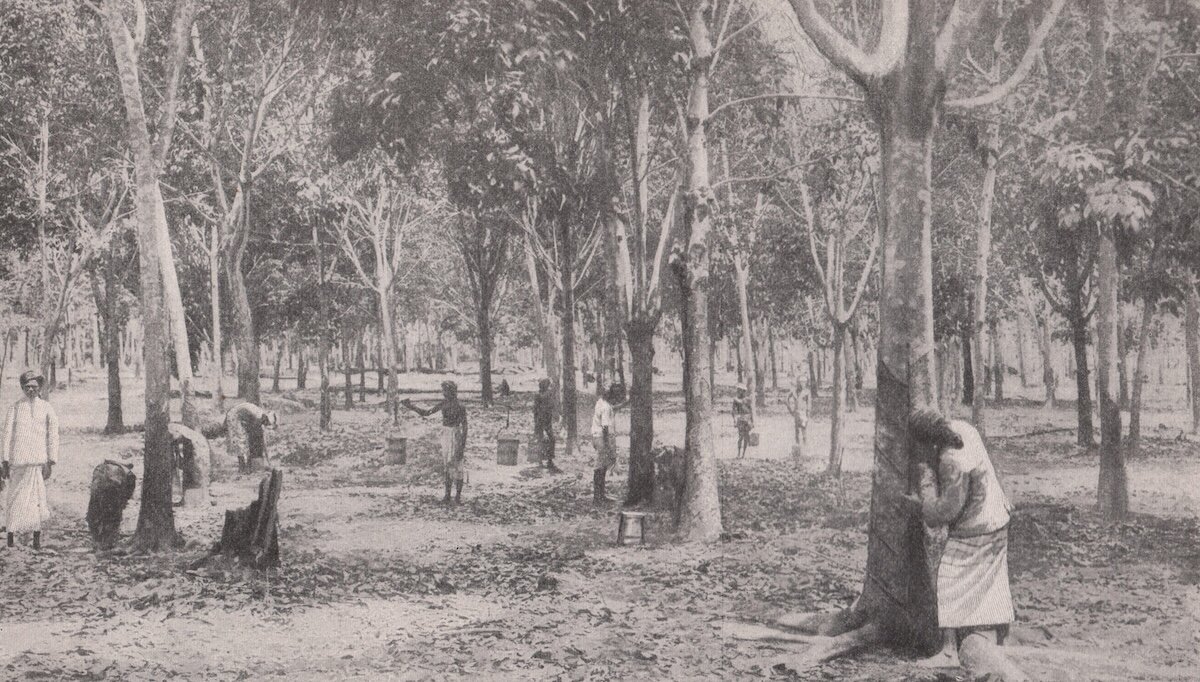
The early 20th century rubber boom transformed British Malaya and parts of the Dutch East Indies into the world’s leading plantation-rubber region as a result of the surge of the automobile industry and a dramatic increase in global demand for industrial raw materials (Woodruff, 1958). Unlike earlier plantation crops (sugar and coffee), which competed with comparable systems of production across the global South, estate rubber developed primarily in Southeast Asia. Until then, the bulk of global supply had been collected from different rubber varieties from wild and semi-wild trees in Latin America and West Africa, where large-scale plantations remained unviable because of a combination of agronomic constraints, especially the leaf blight disease, and organizational difficulties, including the recruitment and control of labour to employ in the plantations.
Labourers tapping for latex in a rubber plantation in the Malay peninsula, 1923.
Source:
Licensed photo from Antiqua Print Gallery, https://www.alamy.com.

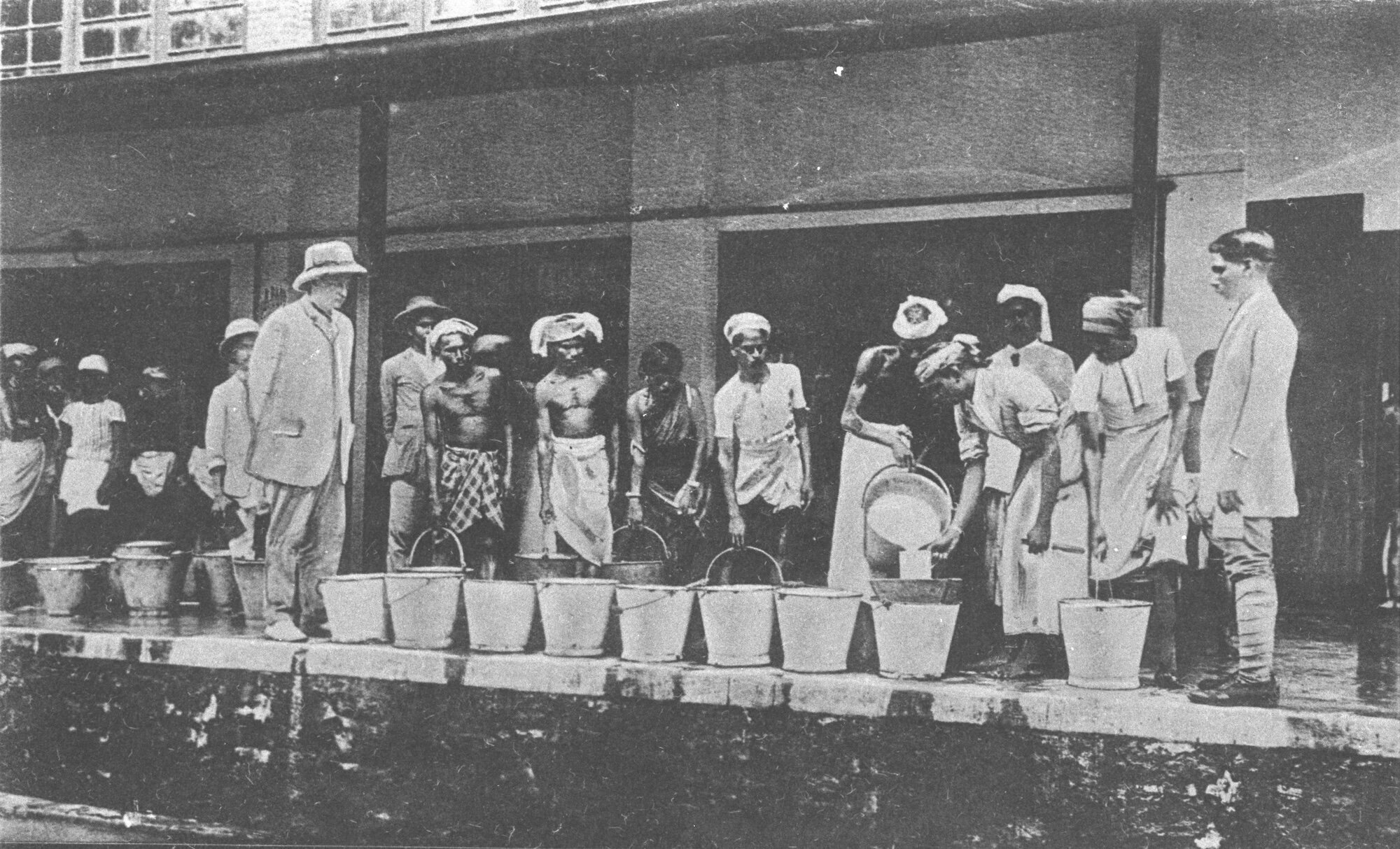
In British Malaya and the Dutch East Indies, rubber expanded through the conversion of existing agricultural land, the acquisition of pioneer estates, and the clearing of new forest, representing a shift from the region’s export-oriented plantation agriculture to a specialized agribusiness cluster centred specifically on natural rubber (Giacomin, 2018a). Western trading firms vertically integrated into plantation ownership and management. They provided capital, organized company flotations, recruited managers, arranged shipping and insurance, supplied machinery, and marketed rubber through Singapore and European financial centres (Drabble, 1972; Rönnbäck et al., 2022; Higgins and Toms, 2026). By the mid-1910s, the rubber industry had become an integrated colonial business system linking estates, ports, laboratories, banks, trading houses, and manufacturers.

Latex brought to a factory to make rubber, Malaya, circa 1920.
Source:
Lim Kheng Chye Collection, courtesy of National Archives of Singapore.

The environmental consequences of this transformation were considerable. Rubber estates required the clearing of land and the establishment of ordered rows of trees, replacing diverse forest ecologies with monocultural landscapes designed for tapping, supervision, and export. Roads, railways, ports, and processing facilities opened new areas to cultivation and intensified the extraction of land and labour. In British Malaya, the expansion of the railway from Singapore toward Kuala Lumpur supported the spread of rubber into Negeri Sembilan, Johor, Malacca, and other districts. In Sumatra, the infrastructure inherited from tobacco, together with trading networks around Medan, Deli, along the east coast, facilitated the expansion of large-scale estates. In Java, rubber developed more selectively within an already crowded agrarian landscape dominated by sugar, coffee, and tea, while in Borneo it spread more unevenly, constrained by weaker transport infrastructure but still encouraged by land concessions and the search for new plantation frontiers (Allen and Donnithorne, 1957; Van der Eng, 1996; Ooi, 1997 and 2002).

The plantation estate was also a racialized and hierarchical environment. Colonial governments and companies organized production through migrant labour regimes involving Indian, Chinese, Javanese, and other workers. European managers, agency houses, and metropolitan investors captured much of the profit, while local urban communities, migrant workers, and smallholders and indigenous populations occupied subordinate positions in the colonial economy (Sandhu, 2010; Bosma, 2020).The environmental impact of plantations was therefore inseparable from social relations. Forest clearance, estate discipline, labour migration, and racial hierarchy were part of the same colonial project. The transformation of land into plantation was also the transformation of people into estate labour and of local ecologies into imperial assets (Lees, 2017).

Rubber acreage in the region expanded at extraordinary speed, growing from only a few thousand acres around 1900 to hundreds of thousands of acres in British Malaya and the Dutch East Indies by 1910. By 1914, plantation rubber had surpassed wild rubber in global volumes, and Malaya alone had overtaken Brazil’s wild production (Drabble, 1973). Rubber became a major export of the Federated Malay States and the Straits Settlements, as well as the East Sumatran plantation belt, turning Southeast Asia into a strategic commodity frontier for the British and Dutch empires.

Monoculture and ecological exhaustion

The environmental limits of the rubber estate model became increasingly visible during the 1910s and 1920s. The boom years had encouraged planters to believe in the almost unlimited promise of tropical land, but as estates matured, the costs of monoculture became harder to ignore. Decades of clean weeding, dense planting, continuous tapping, and soil exploitation degraded estate land. Ground cover had often been removed to reduce competition around rubber trees and to impose visual order on the plantation. In practice, this stripped soils of organic matter, accelerated erosion, reduced moisture retention, and increased trees’ vulnerability to disease. As trees aged, yields declined, and over-tapping weakened them further (Clarence-Smith, 2013; Ross, 2017).

The international rubber restriction schemes of the 1920s exposed the economic fragility of the estate sector, but they also made its ecological weaknesses more apparent. A few vertically integrated plantation companies, such as SocFin, and rubber manufacturers, such as USRC and Dunlop, operated first-class estates with significant research expenditure. Their efforts focused especially on horticultural improvements to increase the yield per acre, including bud-grafting, seed selection, clonal material, and more efficient tapping systems. Yet much of the agency-house-controlled estates, which represented the bulk of the rubber acreage by the 1920s, remained burdened by high fixed costs, rigid labour hierarchies, aging trees, and deeper agronomic problems, such as declining soil fertility, erosion, nutrient depletion, and the management of ground cover. By the 1920s, colonial observers warned that much land under rubber cultivation was rapidly losing its ‘virginal fertility’ and would soon require artificial compensation through fertilizers and other costly interventions (TNA CO/1071/237, Colonial Report FMS, 1920, p. 7).

The estate model had thus exposed the ecological instability of forcing a forest crop into a simplified monocultural environment. Rubber trees could grow in plantations, but their long-term productivity depended on ecological conditions that the estate model often undermined. After more than two decades of intensive cultivation, it became increasingly clear that soil cover, shade, humidity, organic matter, and biological diversity around the trees were essential features to the long-term profitability of rubber cultivation. By removing them in pursuit of order and efficiency, planters had been weakening the very environmental conditions that their estates depended on.

The massive expansion of smallholder rubber production exposed this structural issue even more clearly. Indigenous farmers, and in some cases former estate labourers who had managed to leave plantation employment, had started to plant rubber since the mid-1910s within diversified agroforestry systems: in home gardens, behind padi fields, along forest edges, or within secondary forest (Clarence-Smith, 2013). These plots were frequently intercropped with coffee, pepper, tapioca, fruit trees, and other plants. Smallholders rarely practised the exhaustive clean weeding typical of estates. Their rubber trees often grew in more forest-like settings, where shade, undergrowth, and organic matter helped preserve soil fertility and moisture. In ecological terms, these landscapes were often more resilient and less destructive than estate monoculture.

These factors complicated the colonial dichotomy between modern estates and supposedly backward peasant cultivation. Planters frequently dismissed smallholding landscapes as disorderly and technically deficient, while presenting European estates as scientific, rational, and efficient. Yet, smallholder systems turned out more adaptable and environmentally sustainable. They had lower costs, more diversified livelihoods, and greater flexibility during market crises. By the 1930s, in some cases, they were recorded as achieving yields per acre comparable to, or even higher than, those of estates with aging trees (Bauer, 1948).

By the 1930s, some estate managers began to acknowledge these practices. The ‘forestry method’ of rubber cultivation, associated with figures such as the Danish agronomist and planter F. O. Rasmussen, encouraged planters to treat rubber as a forest crop (The Planter Magazine, 1931a, pp. 158–159). This approach emphasized ground cover, humus formation, shade, controlled vegetation, and soil conservation. In the context of very low rubber prices and a broader economic crisis in commodity markets following the Great Depression of the 1930s, many estates also recognized that traditional practices such as exhaustive clean weeding were not only ecologically counterproductive but also expensive. Some therefore began to reduce clean weeding, experiment with cover crops, especially leguminous ones, and tolerate selected forms of undergrowth. In erosion-prone areas, terracing and protective vegetation became more common. After decades of converting forest into plantation, planters began to recognize that plantation survival required the reintroduction of forest-like ecological conditions (Kathirithamby-Wells, 2005).

Colonial science and the paradox of conservation
Colonial scientific institutions played a deeply contradictory role in the environmental history of plantation agriculture. Since the 19th century, botanical gardens, agricultural departments, and research stations had been central to the expansion of commercial crops. They introduced plants, distributed seeds, developed tapping systems, studied diseases, and advised planters. Yet they also became the first institutions to identify the ecological costs of deforestation, soil exhaustion, erosion, and timber scarcity (Drayton, 2000; Barnard, 2018). This ambiguity reflected the still-fluid boundaries between botany, horticulture, agriculture, forestry, and conservation at the turn of the 20th century. Colonial scientists often saw no contradiction between introducing profitable crops and protecting useful forests. Their goal was not necessarily to preserve untouched nature, but to rationalize the use of tropical environments. Forests, crops, soils, and water were all resources to be studied, classified, improved, and managed (Clutterbuck, 1927).

Conservation emerged from this utilitarian framework and remained embedded in the fiscal and political economy of colonial rule. Forestry departments, botanical gardens, and agricultural research stations formed part of the same administrative structure that supported extraction. In the Straits Settlements and the Federated Malay States, for instance, institutions devoted to agriculture, forestry, and scientific experimentation depended on colonial budgets sustained by export duties, land alienation, and, at least until the 1910s, the state opium monopoly, which extracted rents from the addiction of large sections of the urban population, especially ethnic Chinese communities (Trocki, 1999).

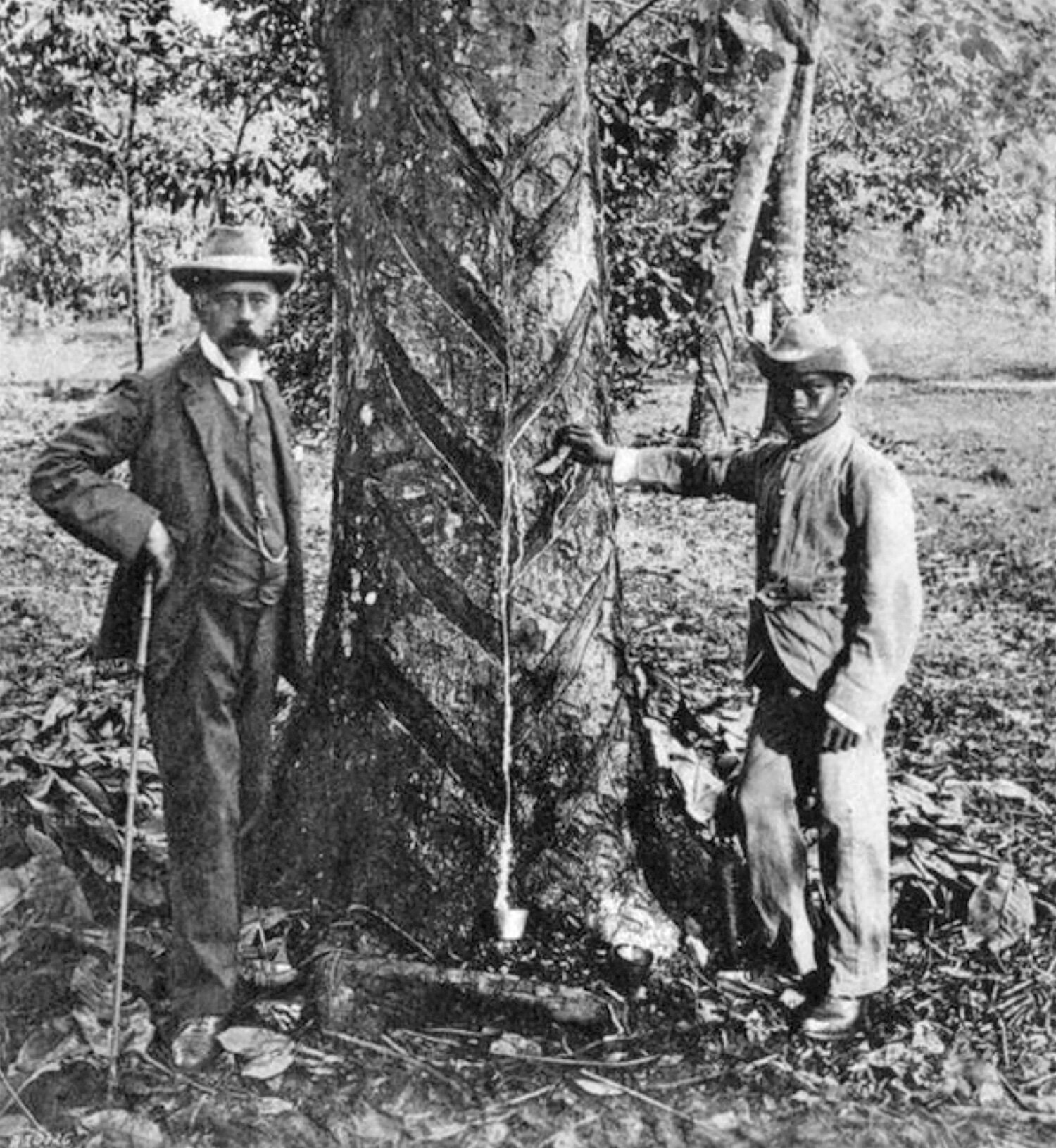
This does not mean that colonial botanists, agronomists, and foresters simply reproduced the short-term profit rationale of plantation companies. Many were genuinely concerned with the long-term degradation of tropical environments. Yet their work remained tied to institutions that had actively supported crop acclimatization, seed distribution, and the commercialization of agricultural products. The career of Henry Ridley, director of the Singapore Botanic Gardens and later celebrated as one of the fathers of the Southeast Asian rubber industry, illustrates this ambiguity. In the early 1890s, Ridley widely distributed rubber seeds among planters and used Hevea alongside other ‘economic’ trees in efforts to reforest Singapore’s reserves, remarking that “the plant grows so well here that I am planting all I can get in the forests”.

By 1892, before Pará rubber spread in the region, Bukit Mandai, one of Singapore’s largest reserves, already contained more than 2,000 Hevea trees. Extraction and conservation readily merged: a forest reserve became, in practice, a vehicle for commercial planting (The Straits Times, 1983, p. 18; Barnard, 2018, p. 71).

Signs of ecological damage were visible well before the rubber boom, but recognition of the problem was uneven and largely confined to specialist circles. By the early 1900s, some colonial officials and scientists had begun to realize that uncontrolled forest destruction threatened timber supplies, water regulation, and agricultural productivity, and early forest reserves and forestry departments emerged partly in response. In Java, for instance, the Cibodas Forest Reserve had been created in 1889 as an extension of the Buitenzorg Gardens. Unlike the production-oriented reserves that later came to dominate the region, Cibodas was an early “political forest”, established primarily for scientific research and conservation rather than timber management, which, however, restricted access to indigenous populations from the area (Boomgaard, 1994, pp. 128–129). 

Henry Ridley (1855–1956) English botanist and geologist who promoted Malaya’s rubber production.
Source:
Licensed photo from Pictorial Press Ltd, https://www.alamy.com

Nevertheless, these measures were limited, species-oriented, and tied to immediate economic needs. In general, and especially in the first phase of rubber expansion, many planters treated the clearing of forest by fire as a visible sign of development: the conversion of jungle into productive estate land and the triumph of ordered cultivation over unruly nature. The apparent abundance of land and timber further weakened any immediate sense of ecological peril. Environmental degradation was therefore understood above all as a risk to the sustainability of colonial extraction and to the authority of institutions charged with managing renewable forest resources and cultivable land.

From the mid-1900s, forest reserves and forestry regulations were thus established to protect watersheds, secure timber supplies, and preserve soil fertility. During the interwar years, especially when restriction schemes temporarily slowed acreage expansion to arrest declining prices, colonial forestry departments used this pause to extend the land placed under reserve. This broader conservation sensibility was reinforced by new institutions and protected areas, including the Society for the Protection of Nature in the Dutch East Indies, established in 1912, and the Ujung Kulon reserve in western Java, created in 1921 to protect the critically endangered Javan rhinoceros. Unlike the more common timber- and water-oriented reserves, Ujung Kulon pointed to an emerging, though still marginal, preservationist strand within colonial conservation.

In general, the broader logic of land concessions for export agriculture was rarely challenged. Tensions with planters emerged only in specific cases, such as when reserves limited access to new land, restricted hillside development, protected wildlife that damaged estates, or interfered with replanting and logging arrangements. Nor should these timid and isolated instances of reserves be understood, at least through the 1920s, as sanctuaries in a modern preservationist sense. Most were production reserves, designed primarily to regulate access to timber and manage forest in a sustainable but still economically useful way.

Land concessions also served broader regulatory goals, excluding indigenous population from land and forest resources, and constraining smallholder rubber expansion during periods of restriction (Vandergeest and Lee Peluso, 2006; Boomgaard, 2007). These forest classifications were, furthermore, neither fixed nor always effectively enforced. Monitoring was costly and colonial priorities shifted, so that rubber and other commercial crops continued to be grown and tapped by local farmers within reserve areas. In several cases, new estate concessions included land that had previously been reserved.

Overall, colonial conservation remained closely tied to agribusiness. Forests were protected because they supplied timber, regulated water, prevented floods, preserved soil fertility, and stabilized the environmental conditions necessary for agriculture and settlement. Conservation policies therefore managed the consequences of plantation capitalism but did not question its foundations. The same measures that served ecological purposes by regulating access to resources also reinforced colonial control over territory and people.

Oil palm and the persistence of the plantation model
The cultivation of oil palm in Southeast Asia entered as an alternative to rubber and as a continuation of the same colonial agribusiness logic. Although the tree (Elaeis guineensis) had been introduced to the region already in the late 1840s, it was developed systematically as an estate crop only from the 1910s and became commercially significant mainly during the interwar period, when rubber stagnation encouraged planters to diversify. Rubber prices were volatile, smallholders were increasingly competitive, and estate profitability was under pressure.

Palm oil appeared attractive because it opened a different market with promising returns, and required centralized and capital-intensive processing, offering some protection from mounting smallholder competition. In addition, many smallholders remained more interested in coconut cultivation, while oil palm harvesting was laborious and dangerous, and the crop’s processing requirements favoured estates with mills, capital, transport, and managerial expertise (Pakiam, 2021). Palm oil also shared important synergies with rubber, since the oil could be shipped using the same technology and infrastructure used for liquid latex. These features made it especially appealing to large estates and agency houses that already controlled the industry (White, 2004; Giacomin, 2018a).

Oil palm was therefore cultivated within the same colonial institutional landscape that had sustained the expansion of natural rubber: botanical experimentation, estate management, processing technology, transport infrastructure, and global commodity markets. As with rubber, it sought to maximise profits for British and European planters (Sultan Nazrin Shah, 2017).

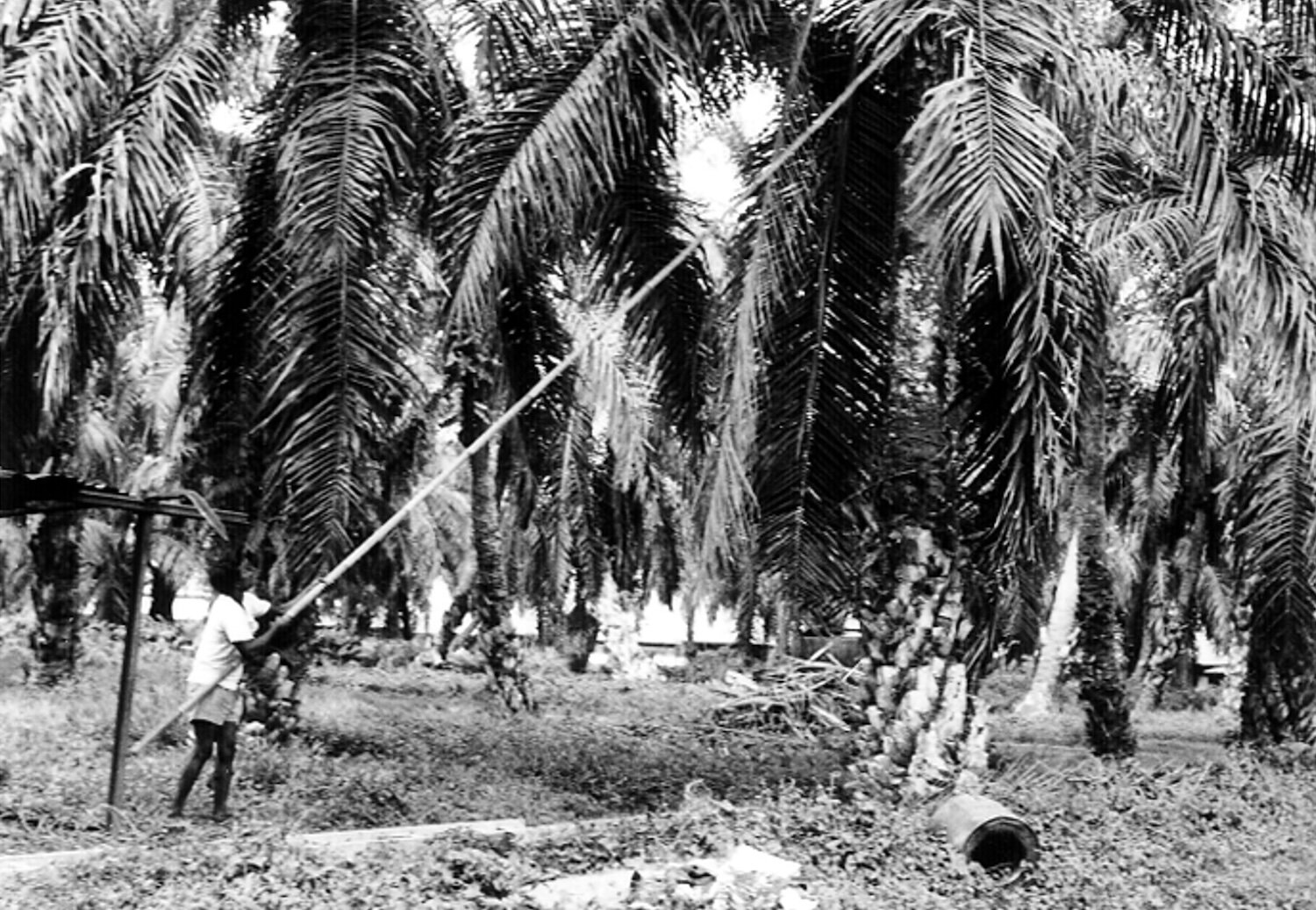
Harvesting oil palms, Ulu Bernam, Selangor and Perak, 1963.
Source:
The UP Saga, p. 105.

This existing infrastructure of capital, knowledge, and logistics could be adapted to a new crop, allowing plantation companies to diversify while preserving the corporate estate model at a moment when rubber was losing some of its economic and ecological legitimacy (Tate, 1996; Henderson and Osborne, 2000). While colonial land and labour regimes played a crucial role, oil palm’s rapid success also depended on the agricultural and service infrastructures built over decades of plantation development. This questions the idea that the industry had ‘shallow roots’ because the crop was imported and recently domesticated (Robins, 2020). The colonial state was necessary, but it was only one part of a wider system of experimentation, estate management, processing capacity, and export logistics.

The prewar environmental impact of oil palm remained more limited than its postcolonial consequences. Before World War II (1939–1945), oil palm acreage was still much smaller than rubber acreage and was concentrated in the hands of a few pioneer companies. In British Malaya, this was especially in large estate holders such as Guthrie’s, Barlow’s, and the smaller Danish company United Plantations. In the East Sumatran plantation belt, this was especially the Franco-Belgian SocFin and the Dutch HVA (Martin, 2003). In the early 1930s, these firms organized through the Palm Oil Pool, which invested in bulking and storage facilities in Singapore, Port Swettenham, and Belawan (The Planter Magazine, 1931b, pp. 353–354).

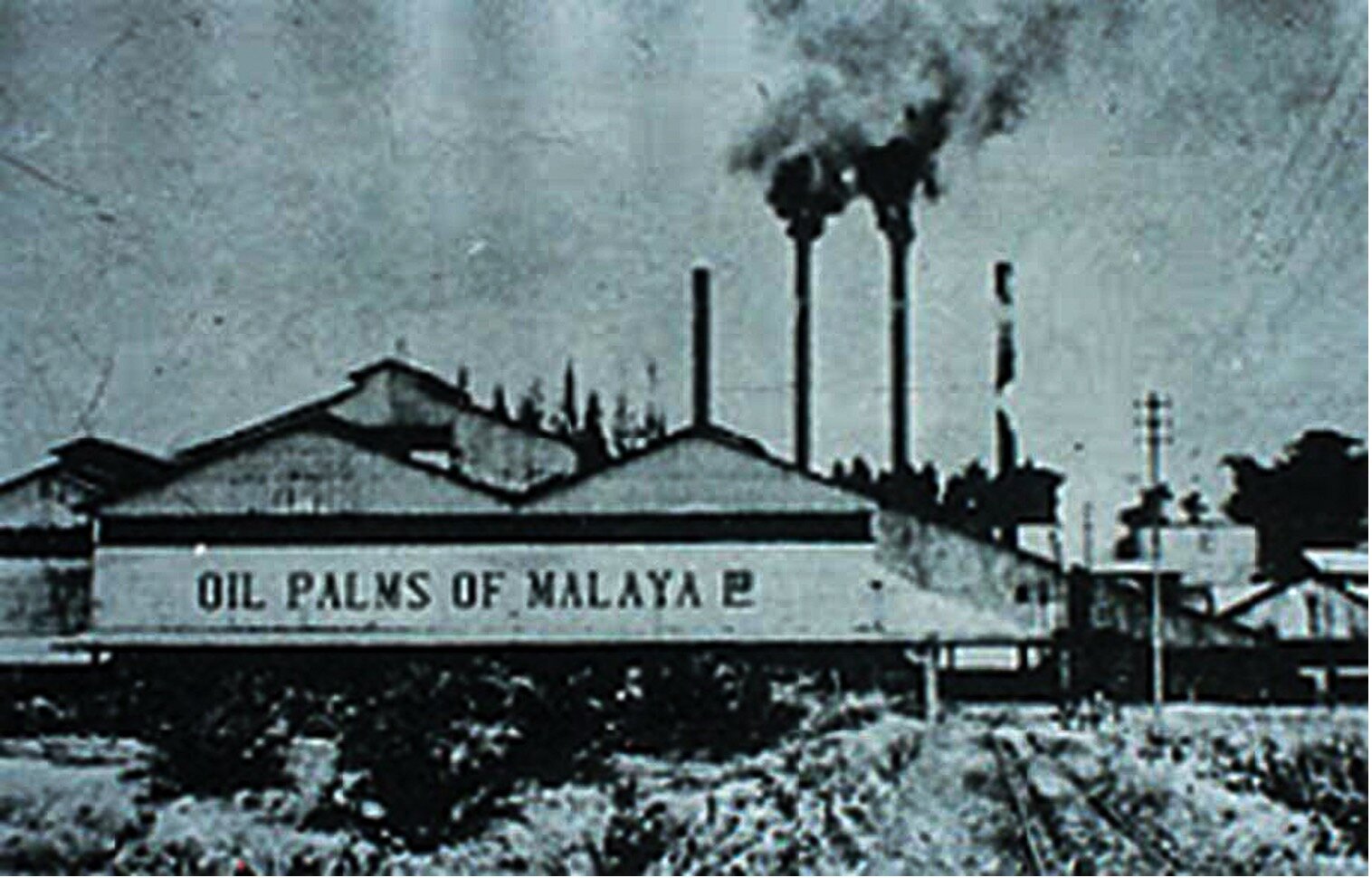
Large-scale processing significantly improved oil quality, reducing fatty acids and increasing extraction rates through better presses. Within a few years, Southeast Asian producers were able to outcompete producers in the crop’s native West African colonies. By the 1930s, Malaya and Indonesia together accounted for around 40 per cent of global palm oil output, laying the foundations for the much larger postwar boom (Giacomin, 2018b).

Malaya’s first palm oil mill, Batang Berjuntai, Selangor.
Source:
Sawit Industry. 23 February 2013. [https://thesawit.blogspot.com/2013/02/history-first-palm-oil-mill-in-malaysia.html].

Thus, the domestication of oil palms reinforced the transformation of tropical ecologies into simplified production landscapes precisely as rubber planters were coming under pressure to revert to agroforestry practices. Oil palm estates required land clearance, estate discipline, processing infrastructure, and close integration with global markets. The negative environmental consequences—deforestation, biodiversity loss, carbon emissions, and conflicts over land—that became globally controversial in the late 20th and first quarter of the 21st centuries were rooted in a longer history of colonial agribusiness. However, many rubber estates continued to be converted to oil palm post-independence.

Conclusion

The colonial plantation economy left a durable environmental legacy. It transformed forests into estates, reorganized land around export commodities, and embedded monoculture within the economic development of British Malaya and the Dutch East Indies. It also created scientific and bureaucratic institutions that treated nature as something to be managed for production. Forestry departments, agricultural research stations, botanical gardens, and plantation laboratories all contributed to the making of a colonial environmental regime. This regime combined extraction and protection, degradation and conservation, short-term profit, and long-term concerns.

The longstanding significance of this history is especially clear in contemporary debates over Southeast Asian palm oil, sustainability, and conservation. Malaysia and Indonesia are now often criticized for deforestation and biodiversity loss associated with agribusiness expansion. This analysis, however, stresses that the historical roots of the problem are colonial. The plantation model was created through imperial crop transfers, Western capital investment, global industrial demand, and colonial land policies. European and North American markets benefited from the transformation of Southeast Asian landscapes long before environmental NGOs began to campaign against tropical deforestation. The modern ‘tropical dilemma’ is therefore also a historical dilemma: countries are asked to reform a production system that was partly imposed on them by the very global forces that later condemned its environmental consequences.

Colonial policies alone do not explain present-day environmental problems. Postcolonial states, national companies, global consumers, investors, and local elites all shaped later developments. But colonial agribusiness established the basic template that was later scaled: export monoculture, estate organization, infrastructure-led frontier expansion, and the subordination of ecological complexity to commodity production. The environmental history of plantations in Malaysia and Indonesia must therefore be understood as a long process, beginning with colonial crop migration in the 19th century and continuing through the rise of modern agribusiness through the 20th.

The central tension is that conservation and degradation developed together. Colonial states and firms cleared forests, promoted monoculture, and intensified resource extraction. At the same time, they created forest reserves, research institutions, and conservation policies to manage the environmental consequences of that transformation. Yet these conservation efforts rarely escaped the economic priorities of the plantation system. Stabilization and support of colonial production and extraction came always before protecting ecosystems for their own sake.


References:

Allen, G. C., and Donnithorne, A. G. 1957. Western Enterprise in Indonesia and Malaysia. London: George Allen & Unwin.

Aso, M. 2014. 'How Nature Works: Business, Ecology, and Rubber Plantations in Colonial Southeast Asia, 1919–1939', in F. Uekötter (ed.), Comparing Apples, Oranges, and Cotton: Environmental Histories of the Global Plantation, pp. 195–220. Frankfurt: Campus Verlag.

Barnard, T. P. 2018. Nature's Colony. Singapore: NUS Press.

Bauer, P. T. 1948. The Rubber Industry: A Study in Competition and Monopoly. London: Longmans Green.

Boomgaard, P. 1994. 'Colonial forest policy in Java in transition, 1865–1916', in R. H. Grove, V. Damodaran, and S. Sangwan (eds.), Nature and the Orient: the environmental history of South and Southeast Asia. Cambridge: Cambridge University Press.

______ 1999. 'Oriental Nature, its Friends and its Enemies: Conservation of Nature in late-Colonial Indonesia, 1889–1949', Environment and History, 5(3): 257–292.

______ 2007. Southeast Asia: An Environmental History. Oxford: ABC-CLIO.

Bosma, U. 2013. The Sugar Plantation in India and Indonesia: Industrial Production, 1770–2010. New York: Cambridge University Press.

_______ 2020. 'Commodification and Slavery in the nineteenth-century Indonesian Archipelago', Journal of Social History, 54(1): 109–124.

Brockway, L. H. 1979. 'Science and Colonial Expansion: The Role of the British Royal Botanic Gardens', American Ethnologist, 6(3): 449–465.

Clarence-Smith, W. G. 2013. ‘Rubber Cultivation in Indonesia and the Congo from the 1910s to the 1950s’, in E. Frankema and F. Buelens (eds.), Colonial Exploitation and Economic Development: the Belgian Congo and the Netherlands Indies compared. pp. 192–210. London: Routledge.

Clutterbuck, P. 1927. 'Forestry and the Empire', Empire Forestry Journal, 6(2): 184–192.

Drabble, J. H. 1972. 'Investment in the Rubber Industry in Malaya c. 1900–1922', Journal of Southeast Asian Studies, 3(2): 247–261.

_______ 1973. Rubber in Malaya, 1876–1922: The Genesis of the Industry. Kuala Lumpur: Oxford University Press.

Drayton, R. H. 2000. Nature's Government: Science, Imperial Britain, and the “Improvement” of the World. New Haven and London: Yale University Press.

Fernando, M. R. 2003. 'Coffee Cultivation in Java, 1830–1917', in W. G. Clarence-Smith and S. Topik (eds.), The Global Coffee Economy in Africa, Asia, and Latin America 1500–1989, pp. 157–172. New York: Cambridge University Press.

Giacomin, V. 2018a. 'The Emergence of an Export Cluster: Traders and Palm Oil in Early-20th-Century Southeast Asia', Enterprise and Society, 19(2): 272–308.

_______ 2018b. 'The Transformation of the Global Palm Oil Cluster: Dynamics of Cluster Competition between Africa and Southeast Asia (c. 1900–1970)', Journal of Global History, 13(3): 374–398.

Harper, T. N. 1997. 'The Politics of the Forest in Colonial Malaya', Modern Asian Studies, 31(1): 1–29.

Henderson, J., and Osborne, D. J. 2000. 'The Oil Palm in all Our Lives: How This Came About', Endeavour, 24(2): 63–68.

Higgins, D., and Toms, S. 2026. 'Managing Agency Business Groups, Elite Directors, and the Rubber Boom, 1897–1913', The Economic History Review, advance online publication. doi:10.1111/ehr.70121

Jackson, J. C. 1968. Planters and Speculators: Chinese and European Agricultural Enterprise in Malaya, 1786–1921. Kuala Lumpur: University of Malaya Press.

John, D. W., and Jackson, J. C. 1973. 'The Tobacco Industry of North Borneo: A Distinctive Form of Plantation Agriculture', Journal of Southeast Asian Studies, 4(1): 88–106.

Kathirithamby-Wells, J. 2005. Nature and Nation: Forests and Development in Peninsular Malaysia. Singapore: Singapore University Press.

Lees, L. H. 2017. Planting Empire, Cultivating Subjects: British Malaya, 1786–1941. Cambridge: Cambridge University Press.

Martin, S. M. 2003. The UP Saga. Kuala Lumpur: NIAS Press and Southdene Sdn Bhd (Nordic Institute of Asian Studies Monograph No. 94).

Ooi, G.-L. 2002. 'The Role of the State in Nature Conservation in Singapore', Society & Natural Resources, 15(5): 455–460.

Ooi, K. G. 1997. Of Free Trade and Native Interests: The Brookes and The Economic Development of Sarawak, 1841–1941. Kuala Lumpur: Oxford University Press.

Pakiam, G. K. 2021. ‘“Not the Oil of the Country”: Smallholders and British Malaya's Oil Palm Industry, 1929–1941’, Agricultural History, 95(1): 69–103.

Parmer, J. N. 1960. Colonial Labour Policy and Administration: A History of Labour in the Rubber Plantation Industry in Malaya, 1910–1941. New York: J. J. Augustin for the Association for Asian Studies.

Peluso, N. L. 2023. Rich Forests, Poor People: Resource Control and Resistance in Java. Berkeley: University of California Press.

Robins, J. 2020. ‘Shallow Roots: The Early Oil Palm Industry in Southeast Asia, 1848–1940’, Journal of Southeast Asian Studies, 51(4): 538–560.

Rönnbäck, K., Broberg, O., and Galli, S. 2022. 'A Colonial Cash Cow: The Return On Investments in British Malaya, 1889–1969', Cliometrica, 16(1): 149–173.

Ross, C. 2017. Ecology and Power in the Age of Empire: Europe and the Transformation of the Tropical World. Oxford: Oxford University Press.

Sandhu, K. S. 2010. Indians in Malaya: Some Aspects of their Immigration and Settlement, 1786–1957. Cambridge: Cambridge University Press.

Stoler, A. L. 1985. Capitalism and Confrontation in Sumatra's Plantation Belt, 1870–1979. New Haven: Yale University Press.

Sultan Nazrin Shah 2017. Charting the Economy: Early 20th Century Malaya and Contemporary Malaysian Contrasts. Kuala Lumpur: Oxford University Press.

Swettenham, F. 1906. British Malaya: An Account of the Origin and the Progress of British influence in Malaya. London: John Lane.

The National Archives (TNA). 1920. CO 1071/237, Colonial Report FMS. Kew, UK.

Tate, D. J. 1996. The RGA History of the Plantation Industry in the Malay Peninsula. Oxford: Oxford University Press.

The Planter Magazine. 1931a. 'The Forestry Method of Cultivation', pp. 158–159.

_______ 1931b. 'Shipment of Palm Oil in Bulk', pp. 353–354.

The Straits Times. 1983. ‘“Mad Ridley” brought us rubber seeds’, 6 November, p. 18.

Trocki, C. A. 1999. Opium, Empire and the Global Political Economy: A Study of the Asian Opium Trade, 1750–1950. London: Routledge.

Tully, J. 2009. ‘A Victorian Ecological Disaster: Imperialism, the Telegraph, and Gutta-Percha’, Journal of World History, 20(4): 559–579.

Van der Eng, P. 1996. Agricultural Growth in Indonesia: Productivity Change and Policy Impact Since 1880. New York: St. Martin's Press.

Vandergeest, P., and Lee Peluso, N. 2006. 'Empires of Forestry: Professional Forestry and State Power in Southeast Asia, Part 1', Environment and History, 12(1): 31–64.

White, N. J. 2004. British Business and Post-colonial Malaysia. London: RoutledgeCurzon.

Wiersum, K. F. 1983. 'Early experiments in Agroforestry: Colonial Tobacco Cultivation with Tree Fallows in Deli, Sumatra', International Tree Crops Journal, 2(3–4): 313–322.

Woodruff, W. 1958. The Rise of the British Rubber Industry During the 19th Century. Liverpool: Liverpool University Press.



Endnote
1The first recorded introduction of Elaeis guineensis to Southeast Asia was in 1848, when four oil palm seedlings, reportedly brought through Amsterdam and Mauritius, were planted at the Buitenzorg Botanic Gardens, now Bogor, Java. Their descendants formed the Deli dura population, the unusually productive and genetically narrow stock that underpinned early commercial plantings in Sumatra and Malaya—later complemented by African material introduced through the Franco-Belgian plantation networks.
The British colonial administration established a network of botanical gardens in its colonies, including in British Malaya, to advance export trade in agricultural crops, such as rubber, coffee, sugar, and spices. Under the leadership of the Royal Botanical Gardens in Kew, London, they introduced, cultivated, and researched various crops and plants, including geographically relocating profitable seeds and plants.
SHARE THIS PAGE
RELATED SITES

ECONOMIC HISTORY OF MALAYSIA
c/o Asia-Europe Institute
University of Malaya,
50603 Kuala Lumpur
Ooops!
Generic Popup2