Articles
Orang Asli: The forgotten first peoples of Peninsular Malaysia
Dr Ranjit Singh Malhi, Independent Historian

The Orang Asli, numbering around 230,000, about 0.7 per cent of Malaysia’s population in 2025, occupy a singular place in the history of the Malay peninsula. They are not merely one among many minority communities—they are the earliest known peoples of the peninsula and the descendants of its oldest surviving human communities, having occupied the Malay peninsula thousands of years before the establishment of Malay kingdoms in the second millennium CE. While the term Orang Asli “has come to convey marginality and backwardness”, this was not always the case in the long history of interaction between the Orang Asli and Malays (Andaya, 2025).

Yet, despite this foundational status, they remain among the most neglected, misunderstood, and underserved peoples in the country. In the words of Gordon P. Means (1985, p. 637), writing some four decades ago, the Orang Asli are “the most deprived and under-represented community” in Malaysia. Their story is at once one of antiquity, adaptation, endurance, dispossession, and continuing struggle.

This historical centrality has been widely acknowledged in scholarly literature. Iskandar Carey (1976) described the Orang Asli as “the truly indigenous inhabitants” of Peninsular Malaysia. Nicholas (2022, p. 21), one of the most prominent modern authorities on Orang Asli affairs, argues that the claim that Malays are the indigenous people of Malaysia is a “myth”.

Leonard Andaya (2002, p. 25) has noted that many Orang Asli themselves have long regarded claims by others to be the “sons of the soil” with scepticism, because they see themselves as the original people of the peninsula. Emerson (1964, p. 12) similarly observed that the Malays were not the earliest inhabitants of the peninsula. Taken together, these scholarly views make clear that the Orang Asli are not peripheral to Malaysian history—they stand at its beginning.

Who are the Orang Asli?

The term “Orang Asli”, formally adopted in 1960, means “original people” or “first people” (Nicholas, 2002, p. 21). It refers collectively to the indigenous peoples of Peninsular Malaysia. The Orang Asli are not a single homogeneous people. Officially, they are divided into three broad groupings: the Negritos, the Senoi, and the Proto-Malays. Each broad grouping is further subdivided into six ethnic subgroups, totalling 18 ethnic subgroups with their own languages, religions, social organization, and physical characteristics. Nicholas (2022, p. 3) has pointed out that the Temoq consider themselves a distinct subgroup, which would bring the practical total to 19 if their self-identification is recognised. The Orang Asli are most concentrated in Pahang and Perak, but are also significant in numbers in other peninsula states.

Negritos: the earliest settlers

The Negritos (formerly called “Semang”) are generally regarded as the earliest surviving population stratum in the peninsula. They speak an Austroasiatic language under the Northern Aslian branch. Archaeological interpretations commonly associate them with populations present since the late Pleistocene (about 50,000 years ago), while some writers, including Nik Hassan Shuhaimi (1998, p. 11), have connected them more specifically with Hoabinhian or Mesolithic-era cultures dating back about 10,000 years ago.

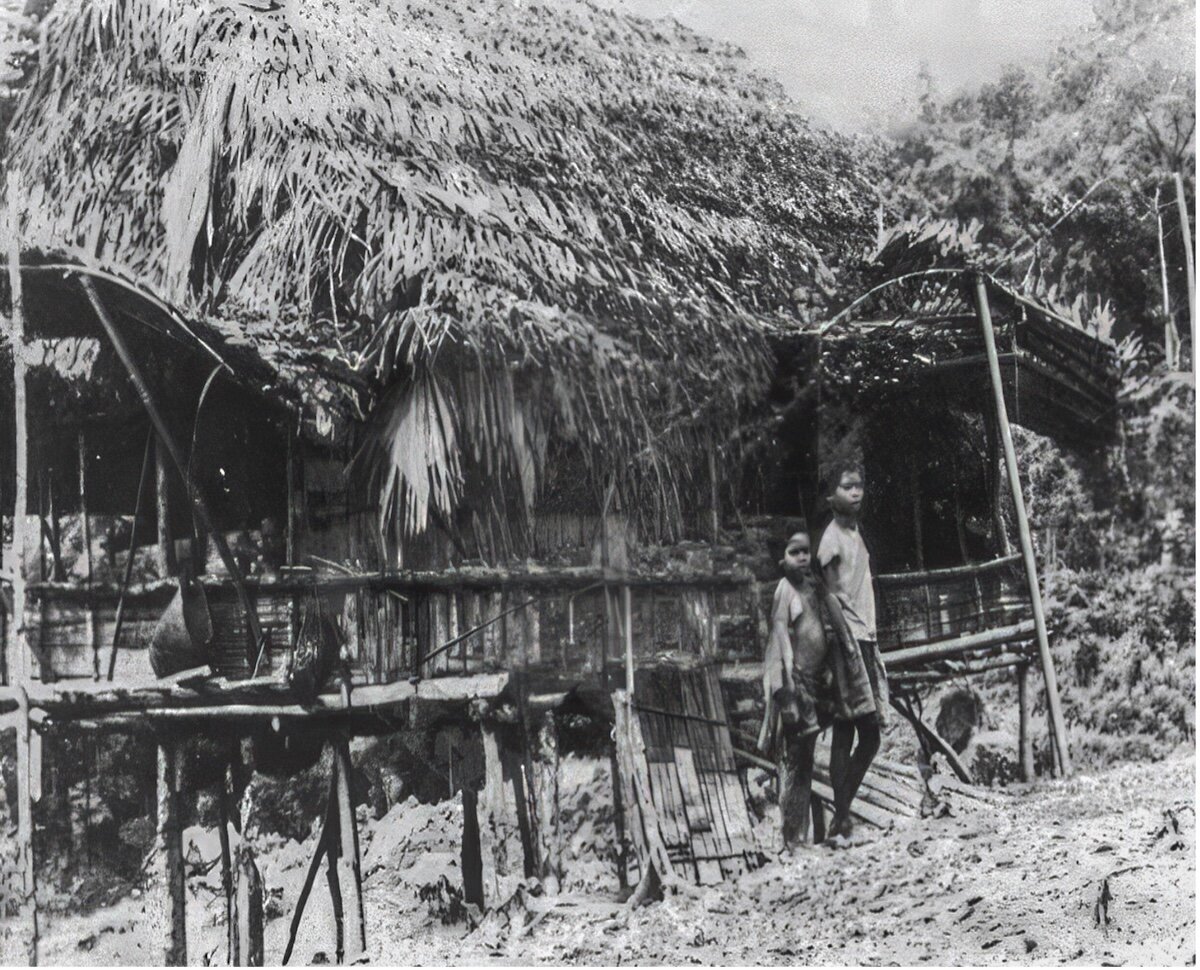
Orang Asli housing with attap roofs, mid-20th Century.
Source:
National Archives of Malaysia, Accession No. 2001/0053300W

Traditionally, the Negritos were forest and coastal hunter-gatherers. Currently, they form about 3 per cent of the total Orang Asli population in Peninsular Malaysia and are usually concentrated in parts of Perak, Kelantan, Pahang, and Kedah. They live on the fringes of the forest, in coastal foothills, and in inland river valleys, with a small number still being semi-nomadic and subsisting on forest produce and hunting. Others engage in small-scale shifting cultivation, planting hill rice, maize, tapioca, and vegetables. Some also engage in wage-labour such as plantation work, construction, or service jobs.

Senoi: the largest Orang Asli group

The Senoi, who today make up the largest proportion of the Orang Asli population, were traditionally swidden agriculturists engaged in shifting cultivation (hill rice, millet, maize, and tapioca), alongside hunting, fishing, and forest collection. They are usually associated with Austroasiatic-speaking (Central and Southern Aslian branches) Neolithic farmers migrating from what is present-day Cambodia and Vietnam around 6,000 years ago (Carey, 1976, pp. 19–20). The largest Senoi subgroups are the Semai and the Temiar. The Senoi were and remain especially associated with the central highlands and interior riverine zones of Perak, Pahang, and Kelantan.

Today, many Senoi are involved in permanent agriculture, owning rubber and oil palm estates. They also trade in petai, durian, rattan, bamboo, wild honey, and resin to earn additional income. A significant number, particularly among the Semai, live in urban areas and are engaged in waged and salaried employment, as well as professional and entrepreneurial activities. The Mah Meri tribe is especially renowned for wood carvings and cultural crafts.

Proto-Malays: Close kin to Malays

Traditionally, the Proto-Malays were more settled agriculturalists and traders. They are generally associated with later Austronesian-speaking migrations (except for the Semelai, who speak an Austroasiatic language of the Southern Aslian branch), often placed within the last 4,000 years (Carey, 1976, p. 22) and linked to movements from the Indonesian archipelago into the peninsula. These groups, found mainly in Pahang, Johor, Selangor, Negeri Sembilan, and Melaka, are culturally and linguistically closer to Malay-speaking populations than the Negrito and Senoi groups are. Many speak dialects or forms closely related to Malay; yet, they remain Orang Asli, with their own histories, genealogies, social systems, and relationships to land.

Currently, the Proto-Malays are a highly settled population engaged in agriculture, riverine or coastal fishing (mainly Orang Kuala and Orang Seletar), wage labour, and entrepreneurial and professional occupations.

Economic and strategic role in early trade

One of the most underappreciated dimensions of Orang Asli history is their major role in the early regional economy since as early as the fifth century CE as collectors of forest products. For centuries, the forests of the peninsula supplied highly prized commodities to local and international trade: rattan, resins, aromatic woods, rhinoceros horns, and elephant tusks. Andaya (2010, pp. 218–219) has shown that forest produce was economically important to Malay coastal polities and international trade, particularly from the first millennium onward. Orang Asli communities were indispensable to this trade because they possessed the expertise to locate, harvest, process, and transport these products from the interior. Coastal rulers and foreign merchants depended on them. In this sense, the Orang Asli were integral to one of the most important premodern export sectors of the peninsula.

Closely related to this was their historic role as porters, guides, and intermediaries to foreign traders in the transshipment of goods across the peninsula due to their intimate knowledge of rivers, mountain passes, and jungle trails. Long before modern roads, railways, and ports, inland routes linked the east and west coasts. These trans-peninsular paths were strategically important because they offered alternatives to the pirate-infested sea routes through the Strait of Melaka and around the peninsula. This was not a minor service role; it was one of the practical foundations on which inland trade and inter-coastal exchange depended.

According to oral tradition recounted by Bah Tony (2026), the Perak royalty and local chieftains provided elephants to the Orang Asli communities around Tapah to transport rattan and other forest products out of the jungle for sale to traders.

Early political role and influence

Beyond economic contributions, the Orang Asli also played a significant political role in the formation and functioning of early Malay states. In modern popular history, they are too often presented as passive background figures, as though the rise of Malay polities occurred over an empty landscape. The historical record suggests otherwise.

Leonard and Barbara Andaya (2017, p. 51; see also Andaya, 2002, p. 28) note that early Malay rulers, including those associated with the Melaka tradition, forged alliances and kinship ties with indigenous populations, including Orang Laut and Orang Asli groups. Such alliances mattered politically because they gave newcomers access to land, routes, manpower, and local legitimacy.

Nicholas (2022, p. 10) also notes that Orang Asli leaders were recognised in Malay political systems and sometimes appointed as penghulus (sub-district chiefs) with honorific titles such as Lela Maharaja and Setia Raja. Interestingly, several Orang Asli leaders in Tapah, Perak, were given honorific titles by the Sultan of Perak, including Maharaja, Lela Negara, and Lela Bunga.

In some regions, their influence appears to have been especially pronounced. Dentan and his co-authors (1997, p. 53) point out that Minangkabau settlers in Negeri Sembilan married Orang Asli women as a way of grounding land rights and political legitimacy through the female line. This indicates that the Orang Asli were viewed as prior occupants whose connection to place had to be acknowledged if later settlers wished to establish durable claims. Such examples show that the making of the peninsula’s political order involved interaction, intermarriage, accommodation, and appropriation between indigenous and migrant communities.

Indeed, the Biduanda clan emerged in Negeri Sembilan through intermarriage between Minangkabau settlers from Sumatra and the indigenous Orang Asli, particularly the Jakun. The Biduanda became the principal indigenous clan and played a pivotal role in legitimising Minangkabau settlement. Their descendants formed the foundation of Negeri Sembilan’s unique adat perpatih system, with the Biduanda recognised as the most senior and prestigious clan in the state’s traditional social and political structure.

Slave raiding

However, these relationships were not always equitable or benign. One of the most painful historical realities faced by Orang Asli communities was slave raiding. Scholars such as Endicott (1983, p. 221), Andaya (2002, p. 38), and Nicholas (2002, p. 7) have documented how non-Muslim Orang Asli communities were preyed upon by Malay and Sumatran raiders (mostly Batak, Rawa, and Mandailing groups), who captured women and children to be sold as slaves. Men were often killed, and surviving communities were driven deeper into the interior in an effort to escape capture. These raids contributed to the image of the Orang Asli as “forest people” living in remote zones, but this remoteness was not simply a timeless cultural preference; it was, in part, a defensive adaptation to violence and enslavement.

The long-term consequences of slave raiding, which ceased around 1920, were enormous. It disrupted settlement patterns, fractured kin networks, reinforced distrust of outsiders, and accelerated the retreat of many communities into more inaccessible forest interiors. It also left a legacy of subordination in how outsiders perceived them—as marginal, uncivilised, or disposable. Such attitudes continued into the colonial period, when Orang Asli were often portrayed less as historical actors than as objects of administration, anthropology, or welfare policy.

Senoi Praaq and the Malayan Emergency

During British rule, the Orang Asli were drawn more deeply into the orbit of the colonial state. Sometimes this meant paternalistic protection; sometimes it meant surveillance, control, and displacement. Their position became especially strategic during the Malayan Emergency (1948–60). Because many Orang Asli communities lived in remote jungle areas where communists also operated, they became critical to both insurgents and counterinsurgents. Some Orang Asli groups, whether voluntarily or under pressure, supplied food, labour, and intelligence to communist forces. British officials soon realised that any successful anti-communist campaign in the peninsula’s interior would require Orang Asli support.

Out of this context emerged one of the most remarkable chapters in Orang Asli history: the formation of the Senoi Praaq in 1956. The unit, composed largely of Orang Asli and especially associated with the Senoi, became famous for its jungle tracking, endurance, stealth, and combat effectiveness. The very name “Senoi Praaq”, often translated as “war people”, reflected an indigenous martial reputation harnessed to counterinsurgency. Historical accounts describe the unit as highly effective in jungle warfare and central to winning over Orang Asli communities in the struggle against communist insurgents. Their knowledge of the terrain and their capacity to move, track, and survive in dense forest made them one of the most formidable anti-communist forces in the Emergency.

The Senoi Praaq deserve far more recognition than they usually receive. The story of the Senoi Praaq is important not only because of military success, but because it shows, once again, that the Orang Asli were active contributors to the making of modern Malaysia. Today, the Senoi Praaq are part of the General Operations Force of the Royal Malaysian Police, continuing roles in border security, reconnaissance, and search-and-rescue operations.

Contemporary challenges: marginalisation and inequality
Many scholars and rights advocates regard the Orang Asli as among the most underserved communities in Peninsular Malaysia. Nicholas (2022, p. 25) has described them as “the most marginalized and impoverished of Malaysians”.

Their socioeconomic indicators have long lagged behind national averages, especially in health, education, and income. According to the Department of Orang Asli Development (Jabatan Kemajuan Orang Asli – JAKOA), in 2021 90 per cent of the Orang Asli were living in deprivation and about one third were in absolute poverty (EPU, 2021). Their life expectancy is about 53 years, compared to the national average of 75 years (Department of Statistics Malaysia, 2019). Only about 2 per cent of Orang Asli children successfully complete tertiary education (The Sun, 2022). Malaysia’s 13th Plan 2026–2030 recognizes the dire need to enhance the quality of life of the Orang Asli and proposes several programmes to improve their access to education and the provision of housing, infrastructure, and basic amenities (MOE, 2025). The challenge will be to ensure effective implementation.

Land rights remain perhaps the most critical and contentious issue. For many Orang Asli communities, land is not merely an economic resource. It is the basis of identity, spirituality, livelihood, customary law, memory, and collective survival. Yet their customary territories have long remained insecure in legal and administrative terms.

A major reason for this insecurity is that Malaysian law gives only limited and uneven protection to Orang Asli customary land. As Yogeswaran Subramaniam (2026, p. 154) argues, Malaysia’s legal system possesses the constitutional capacity to recognise indigenous land laws and customs, but in practice it has often operated through a form of “legal centralism”, whereby Orang Asli customary land rights become legally enforceable only when recognised by the state or the courts. This places the power of recognition largely in the hands of federal and state authorities rather than in the hands of Orang Asli communities themselves (Nicholas, 2007).

Under the Federal Constitution, the Orang Asli are recognised as the “aborigines of the Malay Peninsula”, and Article 8(5)(c) permits laws for their protection, well-being, or advancement, including the reservation of land. However, unlike Malay reservation land, Orang Asli customary territories do not enjoy strong express constitutional protection. Subramaniam (2026, p. 157) notes that the Orang Asli have not been afforded explicit constitutional protection for their languages, laws, traditions, customs, and institutions. Their land protection therefore depends heavily on the Aboriginal Peoples Act 1954, state land powers, administrative discretion, and judicial recognition.

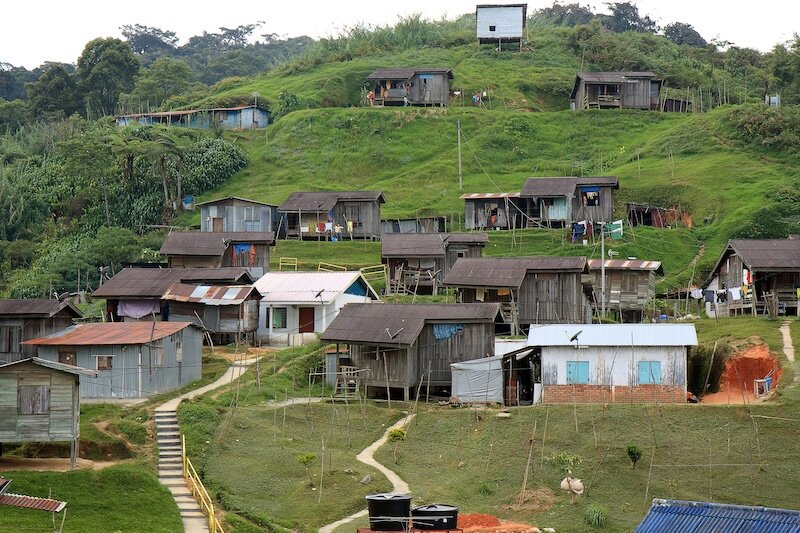
Orang Asli settlement, Cameron Highlands, Pahang.
Source:
Stock photo ID:152539535, 2010

This legal weakness is compounded by the fact that land is primarily a state matter. Although the Aboriginal Peoples Act 1954 allows state authorities to declare Aboriginal areas and Aboriginal reserves, these protections remain limited. Areas gazetted for Orang Asli occupation may also be revoked by state notification, while Orang Asli rights of occupancy in Aboriginal reserves have been described as no stronger than those of tenants at will. In other words, even where land is administratively recognised, tenure may remain precarious unless stronger legal safeguards are provided.

SUHAKAM’s report on Orang Asli rights highlighted the broad non-recognition of customary lands and the resulting insecurity faced by communities across the peninsula. Logging, plantation agriculture, infrastructure expansion, quarrying, and private development have all contributed to encroachment and dispossession. As observed by Nicholas (2002, p. 124), Orang Asli lands have been “regularly acquired or reclaimed – invariably without adequate reciprocal compensation or replacement”.

The courts have partly corrected this injustice. In landmark cases such as Adong bin Kuwau v Kerajaan Negeri Johor and Sagong bin Tasi v Kerajaan Negeri Selangor, Malaysian courts have recognised that Orang Asli customary land rights can exist at common law and require compensation when extinguished. These decisions are significant because they demonstrate that Orang Asli customary land rights are not merely moral claims; they can also constitute legal rights recognised within the Malaysian legal system. However, litigation is expensive, time-consuming, and uncertain. It is not a substitute for comprehensive legislative and administrative reform.

This dispossession is not only material; it is civilisational. When forests are cleared and ancestral territories fragmented, communities lose food sources, medicinal knowledge, ritual sites, burial grounds, and the ecological setting that sustains cultural continuity. In such circumstances, “development” can become another name for erasure. This is why Orang Asli land struggles are not merely local disputes over acreage; they are struggles over survival as distinct peoples.

Religious change and identity issues

Another issue that has drawn sustained scholarly attention is the pressure towards assimilation, particularly through religion and state policy. Nicholas has argued that since around 1980 the Orang Asli have increasingly been targeted by institutionalised Islamic missionary efforts, in some cases linked to wider aspirations of incorporating them more fully into the Malay-Muslim fold. The JHEOA (subsequently renamed JAKOA), in a policy statement of 1983, explicitly expressed its two-pronged objectives: the Islamization of the whole Orang Asli community and the integration/assimilation of the Orang Asli with the Malays (Nicholas, 2002, p. 133).

Endicott and Toshihiro (Nobuta, 2009) have also discussed differential treatment and incentives favouring Muslim converts in certain contexts. This is a sensitive issue, but it goes to the heart of Orang Asli autonomy. The majority of Orang Asli have historically maintained belief systems, cultural practices, and social identities distinct from those of the Malay majority. Any policy that encourages cultural absorption at the expense of indigenous identity deserves careful scrutiny. 

Government policies and development initiatives

At the same time, it would be inaccurate to suggest that nothing has been done. The state has undertaken a range of programmes through JAKOA and other agencies: village resettlement schemes, infrastructure provision, education aid, welfare support, entrepreneurship programmes, and periodic efforts to review laws and policies affecting Orang Asli communities. JAKOA is currently studying amendments to the Aboriginal Peoples Act 1954 in response to contemporary concerns. Although the Act was amended in 1967 and 1974, the amendments did not significantly strengthen Orang Asli rights, especially in relation to land. A deeper question is whether policy is being shaped with the Orang Asli or merely for them. A welfare approach without a rights-based foundation remains inadequate. 

The way forward: recognition, rights, and inclusion

The way forward must begin with recognition. Malaysia needs a fuller and more truthful understanding of who the Orang Asli are. They must be acknowledged not as relics, wards, or development subjects, but as indigenous peoples with a prior relationship to the land and with legitimate claims to self-determination, cultural continuity, and historical recognition. This requires, first, a more honest national narrative.

School textbooks and public history should state clearly that the Orang Asli are the earliest known peoples of Peninsular Malaysia and should give serious attention to their roles in trade, politics, security, and nation-building. The long-standing invisibility of the Orang Asli in mainstream history is not a minor omission. It distorts the very foundations of the national story.

Second, there must be meaningful protection of customary land rights. Court decisions and legal scholarship have already moved in this direction, but far more consistent administrative and legislative action is needed. Land gazettement should be accelerated, encroachments more firmly checked, and the principle of free, prior, and informed consent respected in projects affecting Orang Asli territories.

More importantly, Orang Asli customary land should not be treated merely as state land awaiting administrative approval. The law must recognise the prior and continuing relationship between Orang Asli communities and their ancestral territories. This requires amendments to the Aboriginal Peoples Act 1954 and related land laws to provide clearer recognition of customary territories, stronger security of tenure, fair compensation, and effective protection against arbitrary revocation. Development cannot be just if it is built on the dispossession of the first peoples.

JAKOA and the state governments need to work together and achieve understanding in ensuring the gazetting of communal Orang Asli land so that the land rights of indigenous communities are protected (SUHAKAM, 2021, p. 81).

Third, social policy must be culturally grounded. In education, this means mother-tongue sensitivity where feasible, community engagement, hostel and transport support where necessary, better teacher preparation, and curricula that respect Orang Asli culture rather than treating it as a deficit. In health, it means sustained outreach, nutrition support, maternal care, sanitation, and trust-building in underserved villages. In economic development, it means supporting livelihoods chosen by communities themselves rather than imposing standardised schemes with little regard for local ecology or aspiration.

Fourth, Orang Asli leadership must be strengthened and heard. The community has produced important leaders, activists, professionals, and scholars, and their voices should be central in shaping policy in matters related to them. Organisations and advocates that have long defended Orang Asli rights, including community networks and civil society groups, should be treated as partners. A community cannot be uplifted if it is spoken for but not listened to.

Conclusion

In the final analysis, the history of the Orang Asli is not a footnote to Malaysian history. It is a foundational chapter of it. They were the earliest peoples of the peninsula, custodians of its forests, contributors to its trade, participants in its political formations, and defenders of its security. Yet they have too often been pushed to the margins of public memory and public policy. To recover their story is not only to do justice to one community; it is to tell the truth about Malaysia itself.

A nation matures not by flattering itself with selective memory, but by facing its past honestly and embracing all who helped shape it. The Orang Asli are the forgotten first peoples of Peninsular Malaysia. They should be forgotten no longer.

Further reading:
Andaya, L. Y. 2002. ‘Orang Asli and the Melayu in the History of the Malay Peninsula’. Journal of the Malaysian Branch of the Royal Asiatic Society, 75(1), pp. 23–48.
______ 2010. Leaves of the Same Tree: Trade and Ethnicity in the Straits of Melaka. Singapore: NUS Press.
______ 2025. Changing Malay relationships with the Bugis, Orang Laut, and Orang Asli in the Development of the Malay World. Economic History of Malaysia Project. www.ehm.my.
Andaya, B. W. and Andaya, L.Y. 2017. A History of Malaysia (3rd edn). London: Palgrave Macmillan.
Bah Tony. 2026. Unpublished correspondence with Ranjit Singh Malhi, 5 June 2026.
Carey, I. 1976. Orang Asli: The Aboriginal Tribes of Peninsular Malaysia. Kuala Lumpur: Oxford University Press.
Dentan, R. K., Endicott, Gomes, K. A. G., and Hooker, M. B. 1997. Malaysia and the “Original People”. Boston: Allyn and Bacon.
Department of Statistics Malaysia. 2019. Official portal: Population and Housing Census of Malaysia. Putrajaya: Department of Statistics Malaysia.
Economic Planning Unit [EPU]. 2021. Twelfth Malaysia Plan, 2021–2025. Putrajaya: EPU.
Emerson, R. 1964. Malaysia: A Study in Direct and Indirect Rule. Kuala Lumpur: University of Malaya Press.
Endicott, K. 1983. ‘The Effects of Slave Raiding and the Aborigines of the Malay Peninsula’. In Reid, A. (ed.), Slavery, Bondage and Dependency in Southeast Asia, 216–425. St. Lucia: University of Queensland Press.
Endicott, K. (ed.). 2016. Malaysia’s Original People: Past, Present and Future of the Orang Asli. Singapore: NUS Press.
Human Rights Commission of Malaysia [SUHAKAM]. 2021. The Rights of Indigenous Peoples in Malaysia. Kuala Lumpur: SUHAKAM.
Means, G. P. 1985. ‘The Orang Asli: Aboriginal Policies in Malaysia’. Pacific Affairs, 58(4), pp. 637–652.
Ministry of Economy [MOE]. 2025. Thirteenth Malaysia Plan, 2026–2030. Putrajaya: MOE.
Nicholas, C. 2000. The Orang Asli and the Contest for Resources: Indigenous Politics, Development and Identity in Peninsular Malaysia. Copenhagen: IWGIA.
______ 2002. ‘Organizing Orang Asli Identity’. In Benjamin, G. and Chou, C. (eds), Tribal Communities in the Malay World: Historical, Cultural and Social Perspectives, pp. 119–136. Singapore: ISEAS.
______ 2007. ‘Orang Asli and the Constitution: Protecting Customary Lands and Cultural Rights’. Paper presented at the 14th Malaysian Law Conference, 29–31 October, 2007, Kuala Lumpur.
______ 2022. Looking Back and Looking Forward: Orang Asli Self-Governance and Democracy. Chiang Mai: Asia Indigenous Peoples Pact.
Nik Hassan Shuhaimi Nik Abdul Rahman. 1998. Introduction. In N. H. S. Nik Abdul Rahman (ed.), The Encyclopaedia of Malaysia, vol. 4: Early History, 6–7. Kuala Lumpur: Editions Didier Millet.
Nobuta, T. 2009. Living on the Periphery: Development and Islamization among the Orang Asli in Malaysia. Subang Jaya: Center for Orang Asli Concerns.
Subramaniam, Y. 2026. ‘Constitutional Recognition of Malaysia’s ‘Indigenous Peoples’: Legal Centralism for Land Rights?’. Australian Journal of Asian Law, 27(2), pp. 149–166.
The Sun. 2022. Logistics, Trust Issues Behind High Dropout Rate Among Orang Asli Children. 27 December issue.


SHARE THIS PAGE
RELATED SITES

ECONOMIC HISTORY OF MALAYSIA
c/o Asia-Europe Institute
University of Malaya,
50603 Kuala Lumpur
Ooops!
Generic Popup2