Articles
Revenue farming was employed by the colonial administration of the British Empire to generate income by outsourcing the management of particular economic activities to private individuals in exchange for fixed payments (licence fees). In colonial Southeast Asia, there were four main revenue farms that concentrated on opium, spirits, gambling and pawnbroking. Each had loyal customer bases, which helped to ensure consistent profits and sustainability. While the administration generated revenue through licence fees and tariffs on imported goods, the benefits of revenue farming for the colonial government included avoiding risks and initial investments associated with operating these businesses. The income from revenue farms helped with the building of vital infrastructure and basic healthcare in the major towns. In the Straits Settlements of Penang, Singapore, and Melaka, and the Federated Malay States, revenue farms were a substantial source of income (Sultan Nazrin Shah, 2017).

In British North Borneo, revenue farming was introduced following the establishment of the North Borneo Company administration in 1881, in areas where the government maintained effective control. The revenue farming system provided a steady income for the North Borneo Company. When the Company introduced several crops that failed, and many mining ventures did not produce the expected income, the revenue farms provided a substantial part of government income. This continued until rubber became a profitable crop in the early 20th century.

In North Borneo, revenue farming was exclusively in the hands of Chinese entrepreneurs. The farming system gave the farmer the monopoly rights. Most pioneering revenue farmers were Chinese operators who had crossed over from the island of Labuan, which had come under British rule in 1846. North Borneo’s revenue farms were in many ways an extension of Labuan’s revenue farms. Some revenue farmers became prominent members of the local society and played important leadership roles in the community.

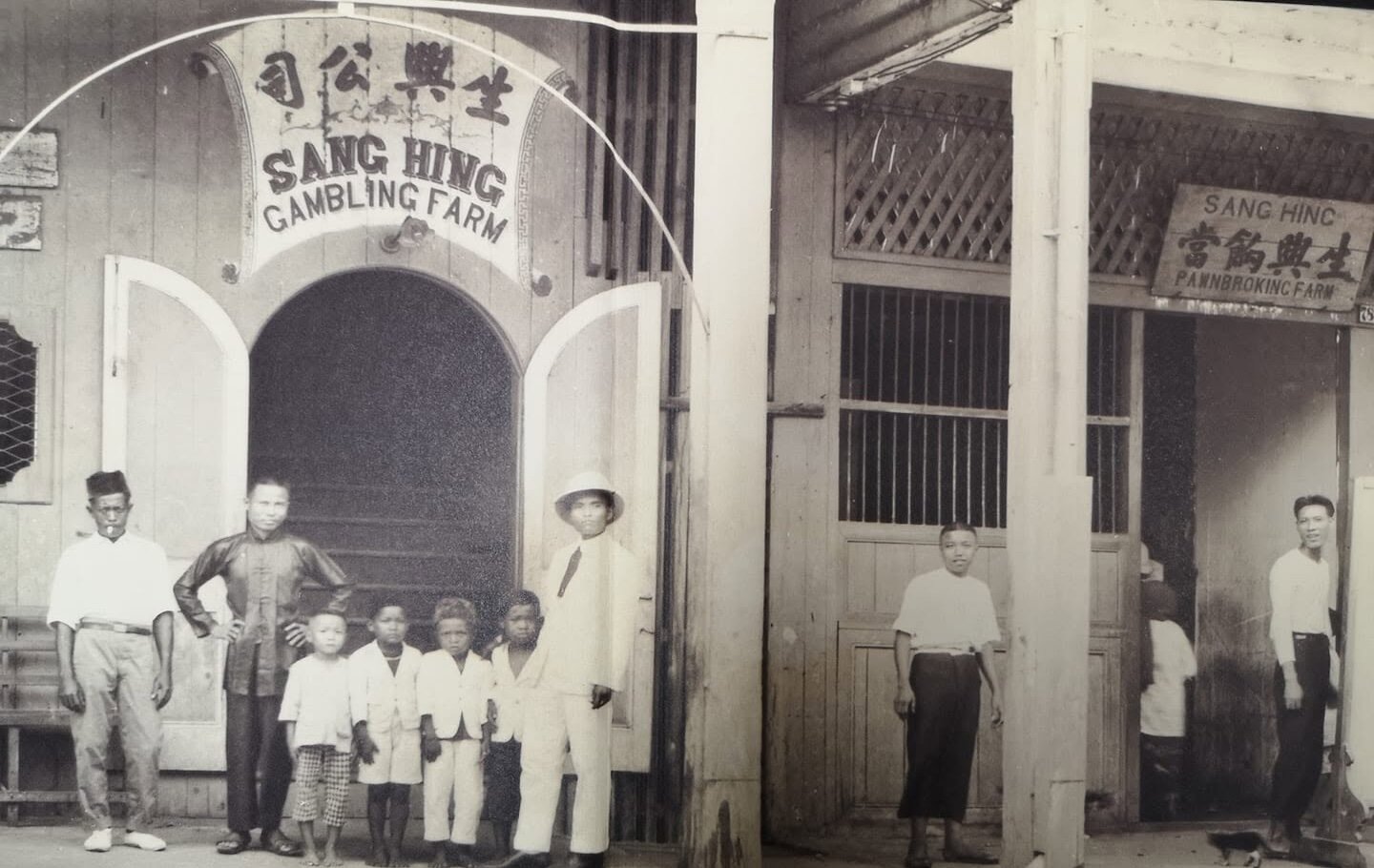
A lucrative business, the Sang Hing gambling and pawnbroking farms conveniently located next to each other, Sandakan circa 1928.
Source: 
North Borneo: A Collective History, 2016.

Beyond Ian Black's (1983) study, which focused on the North Borneo Company's attempts to govern the state, literature on the economic history of British North Borneo is limited. The Company tried to act like a government but ultimately failed to effectively manage the economy. Alfred Hart Everett, a British civil servant and administrator in North Borneo (1878–1883), wrote that the Company’s governing of the state was ‘a gambling style of government’ (quoted by Black, 1983, p. 10). Black's work also touches on the revenue farming system, which he believed was designed to tax the Chinese population. A more recent study by Andrew Massey describes the economy of British North Borneo as stagnant (Massey, 2006). He argues that the Company lacked the funds necessary to fulfil its obligations under the charter to govern the territory in a responsible manner. According to Massey, the Company did not have the resources or the motivation to transform the territory into a strong, export-oriented economy that benefited all its diverse residents. Massey did not delve into the revenue farming system, largely due to the limited available archival evidence.

The British North Borneo Company published handbooks between 1886 and 1934 which included information on the economy, trade, and regulations related to tariffs and excise, but details on revenue farming activities, such as selling opium and running gambling dens, were often vague and listed under licence fees collected (British North Borneo Company, various years). In the revenue farm system, selling opium and operating pawnbroking and gambling and pawnbroking establishments were often seen as activities linked to vice. As a result, the earnings from these activities were typically not detailed but consolidated under collected licence fees.

This article investigates how the government operated revenue farming in British North Borneo, and how Chinese entrepreneurs worked with its administration, including by establishing an operative network at the lowest level on tobacco and rubber estates. It also touches on competition between the old Straits Hokkien operators and the new business elite from Hong Kong (and China).

Establishment of the North Borneo Company
Between 1877 and 1878, a group of businessmen were busy shuttling between London, Brunei, Labuan, and Sulu with the intention of securing concessions that would eventually lead to the establishment of the North Borneo Company administration of the territory of North Borneo (Wright, 1970). Businessman Alfred Dent of the Dent Brothers, and his associate, Baron Gustav von Overbeck, had earlier obtained the original concession of the territory from an American interest.

In 1881, the British North Borneo Company was formally granted a royal charter, allowing it to operate like a government, administering the state. An administrative structure was put in place, modelled after the administration of Hong Kong, the Straits Settlements, and the peninsula’s Malay states. The head of the administration was the Governor, who was appointed by the Court—usually a senior administrator from another British colony. The Governor was assisted by a Government Secretary—a senior member of the administration who usually rose up through the ranks—who oversaw the day-to-day administration of the state.

Various administrative departments were established: Treasury, Judiciary, Constabulary and Prison, Land and Survey, Medical, Forestry, Agriculture, Chinese Protectorate, and later, Education. Apart from the Constabulary and the Land Office, which were situated in Jesselton (now Kota Kinabalu), these departments were in Sandakan, the state capital. The outlying districts were administered by Residents who, in turn, were assisted by District Officers and Assistant District Officers.

During its 60 years of administration of the state, the government operated with a small European staff providing only basic services that were deemed essential. This was due to the tight budgetary constraints, with the result that the situation became so precarious that some districts were not visited by European officers for several years. Many parts of the state were ungoverned, often leading to dissension and rebellion (Tregonning, 1965).

Despite the numerous challenges the Company faced in governing the state, it was still able to sustain operations until the beginning of the Japanese occupation in January 1942, One reason it was able to do so was the Company’s ability to remain financially solvent through a conservative spending policy and a consistent flow of income through revenue farms—see the British North Borneo Herald (various years) and the British North Borneo Official Gazette (various years).
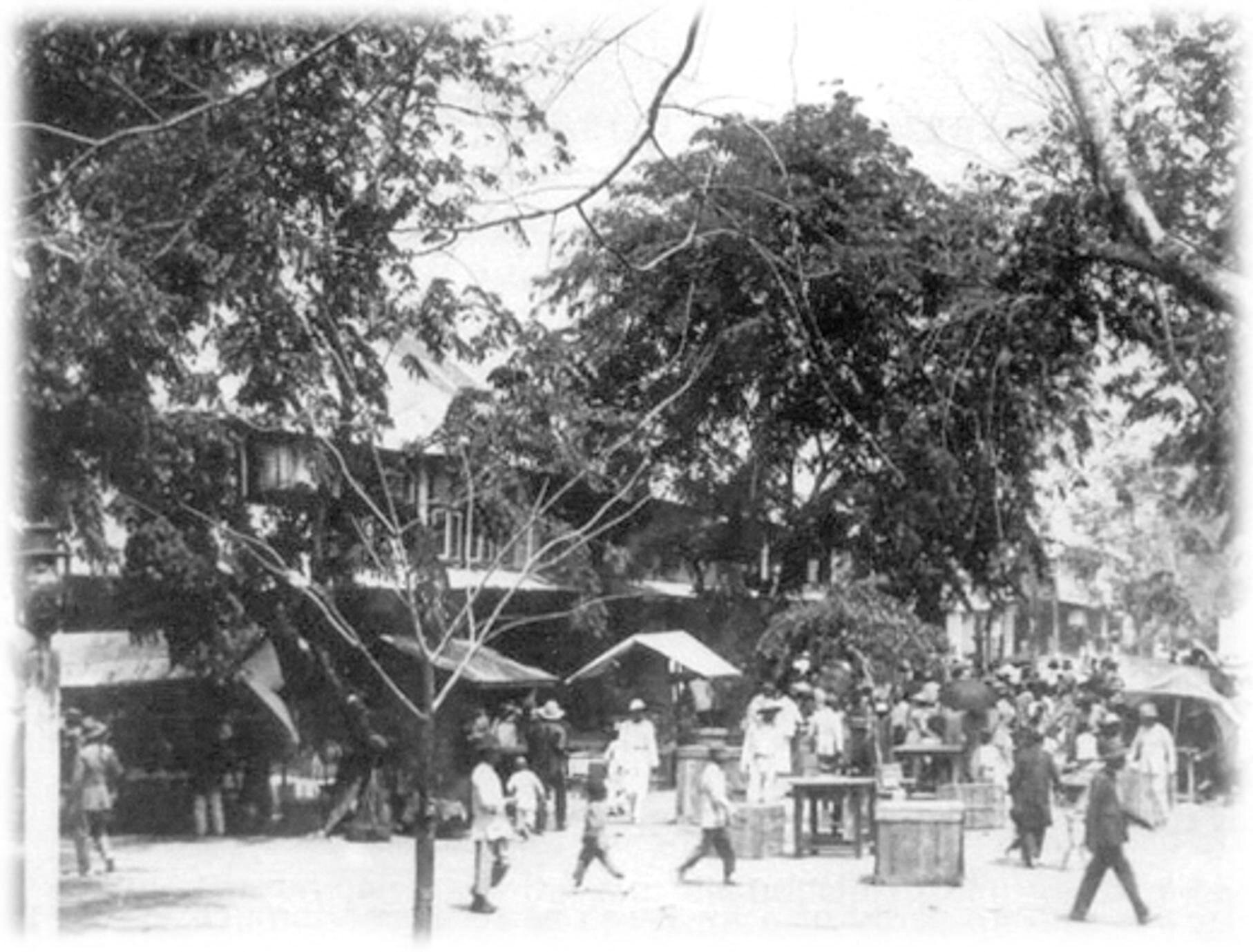
Bond Street in Jesselton (now Kota Kinabalu), North Borneo, was a significant location in 1914, reflecting the regional colonial influence, and serving as a commercial and administrative hub during the British occupation.
Source:
Licensed photo from Alamy stock photos, The History Collection.

The entry of Chinese migrants to North Borneo
The Chinese community in North Borneo was part of the Chinese diaspora that began in the mid-19th century when they started migrating in large numbers. In North Borneo, the first wave of Chinese migration was to the island of Labuan, which was taken over by the British government in 1846 and managed as part of the Straits Settlements (Wong, 1998, 1999). Due to its strategic location as a new commercial hub and the opening of coal mines in the northern part of the island, many Chinese were attracted to Labuan. At its peak, it had at least 1,500 Chinese miners, with the Chinese business community settling mainly in the town of Victoria in the southern part of the island.

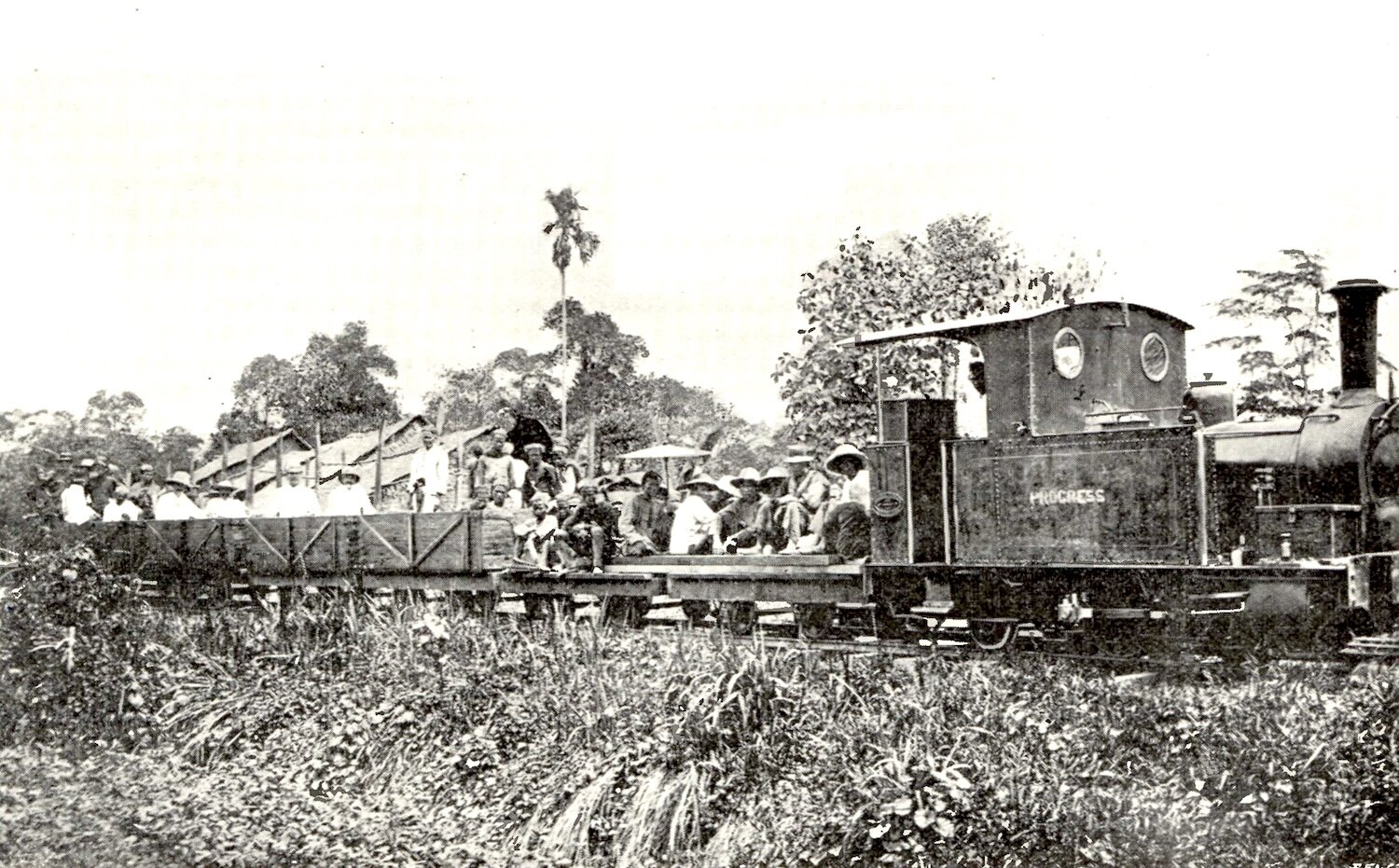
The North Borneo Company began operations on the mainland of North Borneo in 1878, appointing three Residents in Elopura (Sandakan), Tempassuk (Kota Belud), and Papar. This marked the start of significant Chinese immigration to the state. Chinese labourers were recruited from China via Hong Kong when estate tobacco plantations opened. By 1885, there were already 3,000 Chinese living in Sandakan and its surroundings. The development of lands on the west coast by the North Borneo Company brought large numbers of Chinese to work on the numerous estates established in the area. In 1899, the construction of the railway linking the estates and planting areas in the interior to the railway terminus in the new town of Jesselton also involved many Chinese labourers (Ibbotson, 2018). By the time of the 1901 population census of North Borneo, the Chinese numbered over 20,000, making them the second-largest ethnic group in the state after the indigenous Dusun.

Informal opening of first section of Railway by Mr. W. C. Cowie May 1st 1898.
Source: Views of North Borneo, 1899, p.43.

Most of the Chinese migrants were single men who were bound to their employer by labour contracts, which often led to harsh and sometimes fatal treatment by the estate management. Many were forced to become indentured workers with contracts that tied them to the estates for many years. Workers often started their contracts in debt due to financial advances, which many misused for activities like gambling and smoking opium. These activities were a major problem in the state’s economy, as they were in other parts of the British Empire.

There were exceptions to this migration process. One group of migrants stood out. When tasked with the responsibility of recruiting Chinese into the state, Sir Walter Medhurst, Immigration Commissioner, recruited not only labourers and merchants, but also a group of settlers who were predominantly Hakka Christians. They came under arrangements made between the Basel Missionary Society and the North Borneo Company government and arrived in April 1882. Upon arrival, each family was given a plot of land and subsidies; collectively, they were granted land for a church, school, and cemetery. As a result, Hakka Christian communities were established in various parts of the state.

Commissioner Medhurst also brought in a group of merchants who opened shops and businesses in the state. Initially, these merchants had very little business as most of the population were farmers or labourers with very little purchasing power. As a result, these traders were basically trading with one another. It was not until much later that there was sufficient business to go around; by then, only those who were strong enough were able to survive the ordeal. The original merchants came from Hong Kong and southern China, but a handful were from the Straits Settlements and Labuan. It was the second group who were eventually heavily involved in the revenue farming system.

Early sources of government income

As a commercial company, the North Borneo government aimed to maximise profits and minimise costs. It was not its practice to actively engage in business operations, but to rely on revenue collection through taxes and tariffs. The government sold land and implemented various taxes and tariffs on imports and exports. The initial sales of land mainly occurred on the east coast and expanded to the west coast after establishing the new port township of Jesselton. Taxes and tariffs were imposed on imported and exported goods. During the early period, tariffs were mainly collected from timber and jungle produce exports. By the late 1890s, tariffs on exports of commercial crops like coffee and tobacco also generated revenue. Most of the government’s early income came from activities related to land.

The government’s reliance on tariffs from commercial crop exports was not always successful. Before 1898, it encouraged the cultivation of coffee as a commercial crop. It obtained samples of seeds from the Dutch Indies and hired Dutch planters to oversee the planting and management of estates where coffee was cultivated—mostly located on the east coast of North Borneo with few in the interior. At first the efforts yielded positive results until disease wiped out the crops, rendering the coffee venture unworkable.

After the failure of the coffee venture, the government introduced a new commercial crop, tobacco. Once again, it looked to Sumatra, specifically Deli, where tobacco cultivation was thriving. Seeds and planters were obtained from Sumatra, leading to the establishment of numerous estates along the Segama River basin on the east coast. Tobacco cultivation also flourished in Langkon on the Kudat Peninsula due to the fertile volcanic soil, and North Borneo’s tobacco leaves gained recognition in European markets. North Borneo tobacco leaves were said to be of excellent quality, comparable to Havana leaves from Cuba. However, the collapse of North Borneo’s tobacco industry came after the introduction of US tariffs on tobacco imports in the early 1890s, making it economically unsustainable to continue operations (John and Jackson, 1973).

Rubber was introduced as the new crop in North Borneo at the beginning of the 20th century. The Company discovered that the soil on the west coast was ideal for rubber cultivation. To promote rubber planting, the Company invited Henry Ridley from the Singapore Botanical Gardens to visit North Borneo in 1897 for expert advice. The success of early rubber cultivation led to a large-scale planting effort, which in turn facilitated the development of the state’s west coast, including the construction of a railway connecting the interior to Jesselton.

The demand for more Chinese labourers increased with the success of rubber and the expansion of plantations in the west coast and the interior. Revenue farming flourished at the beginning of the 20th century to meet the needs of a growing number of Chinese estate labourers. This practice became controversial as it generated income from activities considered to be vices, such as opium smoking and gambling. Despite the controversy, the Company viewed revenue farming as a profitable business that needed to be maintained. 

North Borneo’s revenue farming system

The revenue farming system, which involved giving out business monopolies to private companies through a bidding process, was introduced shortly after the North Borneo Company received a royal charter in 1881. In North Borneo, these monopolies included trading in opium, arrack (spirits), gambling, pawnbroking, and sometimes even blacan (prawn paste), and collecting government fees. Every year, there would be tenders for these businesses. The successful bidders had to pay the government a fee for the licence. They would then lawfully run the business in the most profitable way they could. The revenue was significant and lucrative. Black (1983) described the revenue farming system as primarily targeting the Chinese population's 'vices, not virtues', through licences for opium, spirits, imported tobacco (indigenous tobacco was not taxed), gambling, pawnbroking, and prostitution.

Since the Company did not have experience with such businesses, they borrowed regulations and laws from other places, such as the Straits Settlements where the revenue farming system was common. When Labuan became part of North Borneo, from 1890 to 1906, laws from the island were added to the existing ones for running the revenue farming system in the state. For example, the opium farm, the most profitable, followed Labuan Ordinance No. II of 1875 and Notification No. III of 1889. The pawnbroking farm followed Labuan Ordinance No. III of 1868, changed by Labuan Ordinance No. I of 1872 and Proclamation No. V of 1868 and Notification No. 131 of 1889.

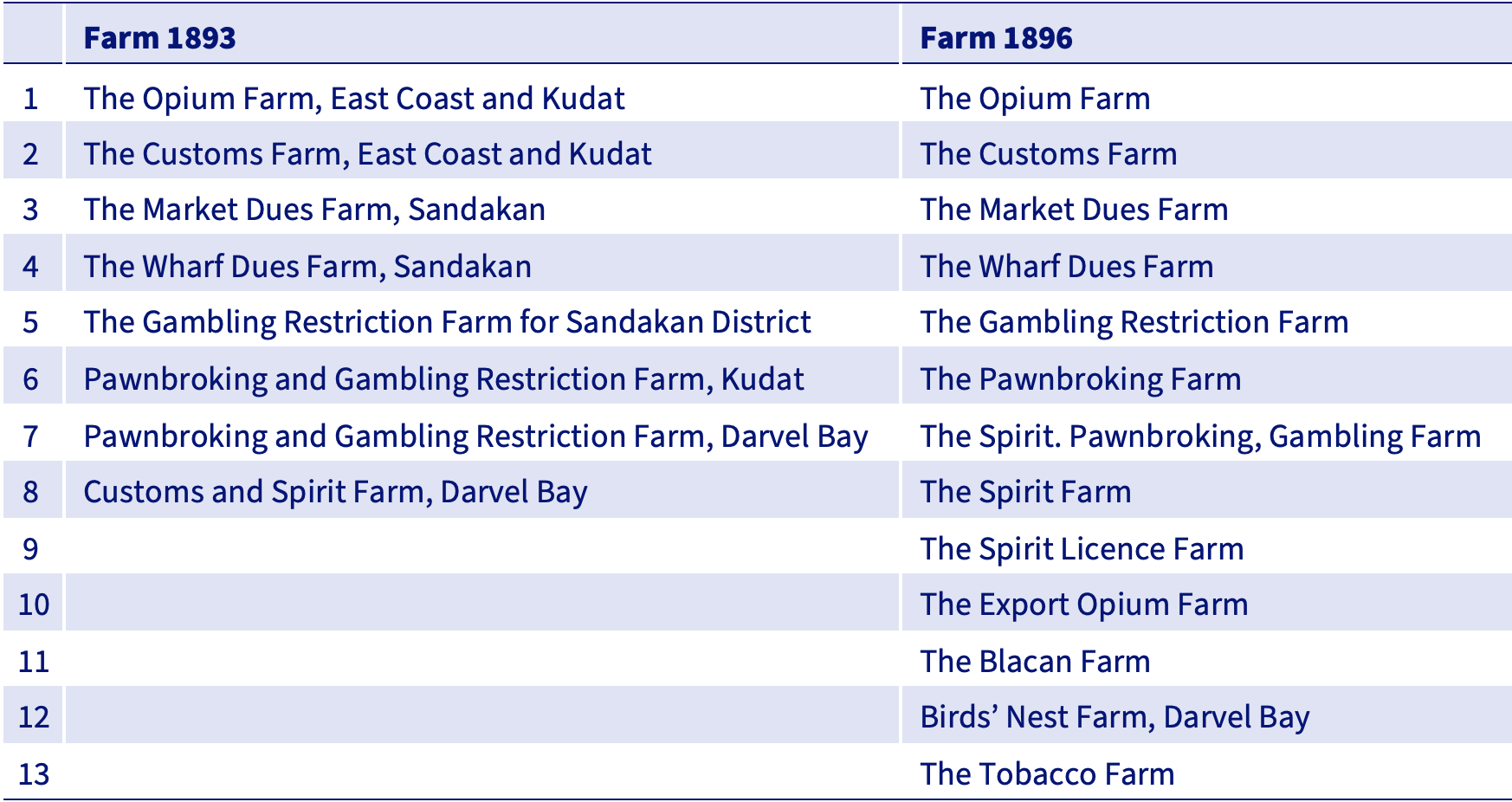
The number of businesses outsourced increased over time (Table 1). In 1893, there were eight on the list, including the pawnbroking and gambling restriction farm specifically for Kudat where the two businesses were combined. Crucially, the tendering for revenue farms was carried out with administrative financial considerations; it was only pursued in places where there was sufficient potential income to be generated. Therefore, each item being outsourced also had a specific designated location. After just three years, in 1896, the number of businesses being outsourced had grown to thirteen.

From that point on, unless otherwise specified, the farms were designated for the region under government control. Before the establishment of Jesselton in 1899 and the opening of the West Coast, all the tenders called were for the districts of Sandakan, Kudat, East Coast, and Darvel Bay. Only after 1899 was the region known today as the West Coast included in the revenue farming system.

Table 1: Revenue farms by type and location, North Borneo, 1893 and 1896

Most farms were businesses that sold specific items like opium, tobacco, blacan, and spirits. Some farms, however, collected dues. For example, the bird’s nest farm was responsible for gathering the government's 10 per cent share from privately owned bird’s nest caves on the east coast. The market dues farm and the wharf dues farm issued licences for trading and docking at the wharf, respectively. Instead of the government directly collecting these dues, they outsourced these operations to reduce costs and to employ more efficient and motivated collectors who received a percentage of their collections. The customs farm had a similar setup; it granted the farmer the exclusive right to collect import and export duties owed to the government, covering a wide range of goods and services—rattan, gutta, spirits, salt, matches, kerosene, brassware, jungle produce, cloth, and sea produce.

Most operators of North Borneo’s revenue farms were Chinese who had the necessary funds to secure tenders and pay the government the agreed-upon amount. Many operators had previous experience as revenue farmers in other parts of the British Empire, particularly in the Straits Settlements and Labuan. The same group of Chinese businessmen who moved to the mainland after it was taken over by the North Borneo Company in 1881 also competed for revenue farming opportunities.

In 1882, the first official opium farmers for Sandakan and the Tanjung Sugut and Sibucu districts were Neo Chin Ting, Choon Sin, Lim Jew, and Twa Tow. Neo Chin Ting and Choon Sin were well-known opium sellers in Labuan before expanding their business to Sandakan. Lim Jew and Twa Tow were likely Hokkien or Teochew. This marked the rise of Hokkien and Teochew business syndicates in North Borneo's revenue farming industry. Koh Kim Hing, a Hokkien who owned Kim Eng Watt Co., took over the opium farm in Sandakan and the East Coast in 1889, despite having no ties to Labuan or the Straits Settlements.

The opium business was usually managed by businessmen based on location, but in 1884, Lim Peng Chuan from Singapore became the first overall opium farmer for the entire state. He secured exclusive rights to import and sell opium in Sandakan and the North Borneo’s east coast. Lim operated different types of opium-selling establishments, including smoking dens in estates and shops in towns where opium was sold by weight.

At first, many companies were eager to enter the lucrative farming business, especially in the opium sector. In 1884 and 1885, a group led by Lee Peck Yow, Lim Swee Thong, Sim Moy Puan, Tan Chop Muh, and Swee Will, operating under Bun Yong Seng Co., took over the opium farm on the west coast of North Borneo. This operation was smaller compared to Lim Peng Chuan's farms in Sandakan, Kudat, and the east coast, as most of the land was still owned by local chieftains appointed by the Brunei Sultanate. Revenue farms were limited to areas under the Company's control, such as Gaya Island, Tempassuk (Kota Belud), and some unopened territories, for cultivation.

Many opium farmers were also involved in other businesses. Goh Tek Seng was a spirit farmer in Sandakan and Kudat in 1889. In 1904, opium farmer Goh Yong Soon's Nam Wah Thai was also operating spirit, pawnbroking, and gambling farms in the West Coast, Keppel, Province Dent (Padas), and Labuan, making him very wealthy and a community leader.

Koh Kim Hing, the opium farmer for Sandakan and Province Alcock in 1889, was appointed Kapitan China of North Borneo from 1895 to 1910. Koh, the owner of Kim Eng Watt Co., also served as president of the Hokkien Association in Sandakan and was a council member of the North Borneo Chinese Chamber of Commerce. Chee Swee Cheng, a well-known opium farmer in Labuan and North Borneo, accumulated wealth and social status through his close ties with the British North Borneo Company’s administration. Chee's partner, Lim Swee Cheng, was the first Asian representative in the North Borneo State Legislative Council established in 1912 (Lee and Chow, 1997).

The end of opium and gambling farms

Opium farms
In 1912, the North Borneo Company made the decision to take direct control of the opium business. This change was not made independently, but in response to global movements advocating for an end to what was viewed as an exploitative system. The Philippines had already stopped the practice in 1906 under the American government, and the Malay States followed on 31 December 1910, implementing a government monopoly on 1 January 1911.

The main reason for this policy shift was a growing moral concern within the Company and internationally regarding opium smoking as a destructive vice that needed to be addressed. The Company's reputation suffered from the significant opium sales facilitated by Chinese businessmen profiting from the demand among labourers. The government decided to take direct control over opium imports and exports, establishing opium-selling shops and granting licences to authorised sellers in different areas, effectively cutting off the major Chinese businessmen from the trade. Chee Swee Cheng, for example, in 1915 shifted his focus to founding the Ice and Power Company in Jesselton and later in Sandakan, before returning to Singapore to establish the Overseas Chinese Banking Corporation.

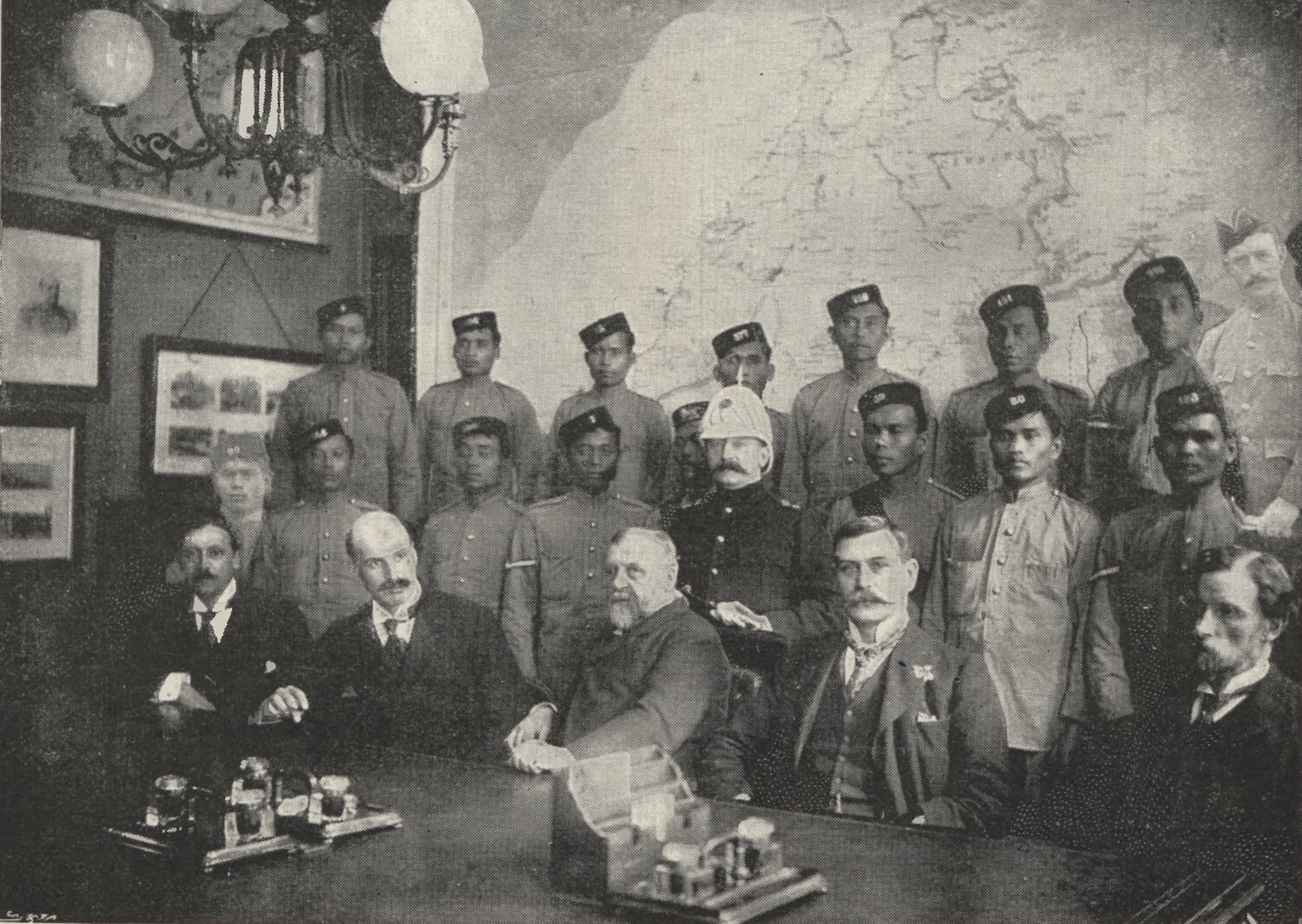
Board of directors of the company, surrounded by the members of the British North Borneo Constabulary, 1899.
Source:
Views of North Borneo, 1899, p. 3.

After the First World War, the government continued to sell opium but restricted sales to specific locations and registered smokers. A report to the League of Nations Commission on Opium from the North Borneo Company showed a decline in the number of licensed venues selling opium, indicating a shift away from widespread access to the substance.

Opium smoking among North Borneo’s Chinese workers, who spent much of their wages on it, was affected by government efforts to reduce the practice (Trocki, 1990). Measures to decrease the number of opium smokers in the state were implemented following the agreement made at the First International Opium Conference in Geneva in 1925. Changes to the Chandu Revenue (Amendment) Ordinance in 1928 included the registration of opium smokers in North Borneo, preventing the drug use by those who were not registered smokers.

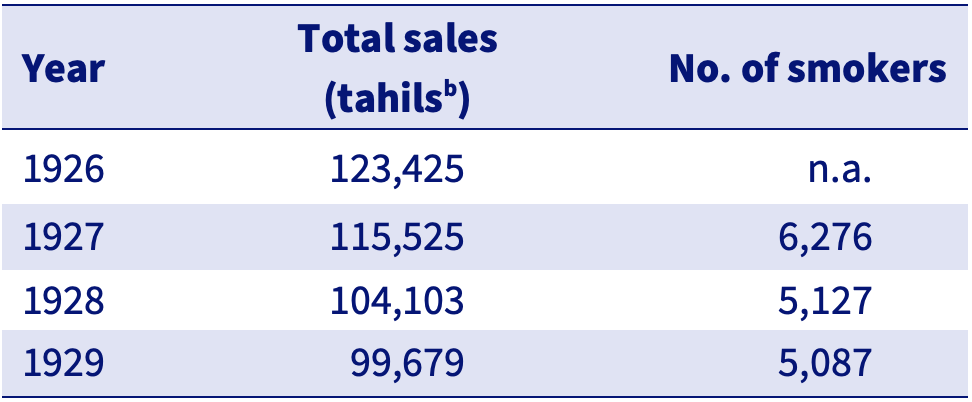
As a result of these actions, along with the decline in rubber sales and the decrease in prices of other commodities in the state during the late 1920s, the consumption of opium gradually decreased (Table 2).

Table 2: Sales of chandua North Borneo, 1926–1929
Notes: Chandu is the cooked or processed form of opium.
bTahil was a traditional mass unit of weight used to measure and price opium (1 tahil = 37.8 grams).


While the number of opium smokers decreased over the first four years of the opium restriction scheme, the figures were inconclusive because the government remained the sole retailer of opium. As a result, there were many cases of opium smuggling, carried out by Chinese who hoped to make a big profit by selling illegal opium to non-registered opium smokers as well as to those who needed extra.

There were also concerns among the Chartered Company officials about potential objections from the Chinese opium smokers, which could cause some annoyance and irritation. In view of this possibility, the Commissioner of Customs and Excise suggested that the estates be involved in the administration of opium-smoking. Measures to discourage and curb opium smoking in North Borneo, by raising the price, continued well into the late 1930s, and the number of smokers declined significantly.

Gambling farms

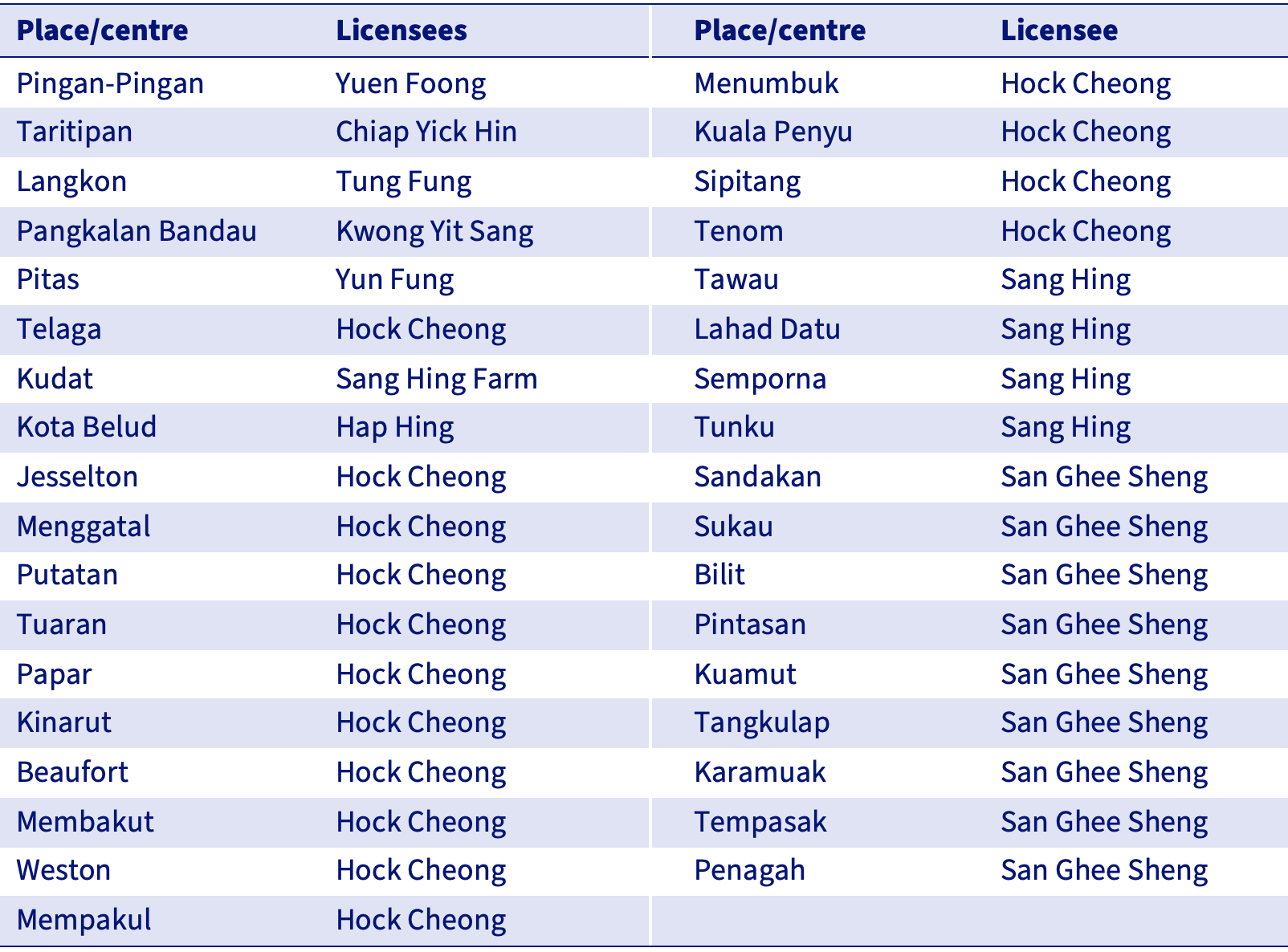
The government, however, kept other revenue farms running, including the profitable pawnbroking and gambling farms (Table 3)—gambling, viewed as a vice with significant societal impact, was not prohibited until 1931. In 1912, the Chinese Chamber of Commerce in Sandakan had requested the Governor to ban gambling in the state, but little action was taken. The government's tepid response was largely due to gambling being a major source of revenue for the Company. By the 1920s, the government was earning between Straits$270,000–500,000 annually from pawnbroking and gambling farms. Gambling, including the popular wah-weh lottery, was allowed to continue as some Chartered Company officials believed it helped keep the Chinese population politically inactive. As a result, gambling remained prevalent in North Borneo.

Table 3: Pawnbroking centres and gambling licensees, North Borneo, 1928 

As the Chinese community continued to heavily support gambling dens and pawnshops, this issue remained a top concern for some Chinese leaders. They once again appealed to the government, urging for an end to gambling in North Borneo. As a result of their efforts and a shift in the Straits Settlement government's stance on gambling, the Chartered Company government in North Borneo gradually implemented a ban on gambling in 1927.

In addition to their moral apprehensions about the excesses of their fellow Chinese, the leaders' persistent calls for the ban on gambling may have also stemmed from business competition. Locally-owned Chinese businesses were struggling to compete with successful foreign-owned farms. This was particularly evident with the Sang Hing company, managed by Loh Poh Yuen on behalf of a Singapore syndicate, which held the majority of gambling and pawnbroking licences in North Borneo after 1920. Therefore, advocating for a ban on gambling would prevent the Singapore company from reaping hefty profits.

Following a gradual ban, the government reduced the number of gambling establishments to seven which were located in the state’s major towns—Sandakan, Jesselton, Tawau, Papar, Kudat, Beaufort, and Lahad Datu. This move discouraged plantation workers from engaging in excessive gambling, as the centres were no longer conveniently located near their workplaces. However, it is uncertain whether illegal gambling gained popularity after the ban took effect. The gradual ban process further reduced the number of gambling establishments from seven to two by January 1929, with only the centres in Jesselton and Sandakan remaining operational until a complete ban was enforced in January 1931. For the Chinese who were accustomed to gambling, the ban deprived them of a significant pastime.

The impact of the sudden gambling ban was felt throughout North Borneo’s Chinese community, but its economic impact did not happen immediately as the Company had expected. They were confident that they would have enough alternative revenue sources, particularly from rubber and timber tariffs.

Conclusion

This article has reviewed the revenue farming system in British North Borneo from 1881–1941. As in many parts of the British Empire, the system was introduced as a means of government revenue collection, but utilising a third party to do so. Various businesses and services were farmed out to businessmen who tendered for the licence or rights to operate in return for a payment which became the government’s income. The revenue farming system covered a wide range of businesses, but the most lucrative were farms dealing with opium, spirits, pawnbroking, and gambling. These four commercial services were favoured and required by many of the Chinese who were brought in to work in the state’s numerous plantations. There were users from other ethnic groups but their numbers were small.

Almost without fail, the revenue farming system was dominated by Chinese businessmen; most were Straits-born Chinese who came either from the Straits Settlements or from Labuan Island off the coast of North Borneo. The dominance of these Straits-born businessmen in the more lucrative part of the revenue farming system was due mainly to their long experience of working under a similar system in the Straits Settlements and after 1874 in the peninsula’s Malay States. Even those who had operated in Labuan before crossing over to the North Borneo mainland were very advanced in their modus operandi and were able to form powerful syndicates to take over the majority of the opium, spirit, and gambling farms.

By relying on the revenue farming system, the British North Borneo Company administration was able to earn a handsome income, thus allowing the Company to stay afloat throughout its rule over the state. In return, the revenue farmers were able to benefit from their investments in the system, particularly those who were able to win rights to the more lucrative farms. Many of the revenue farmers were able to become wealthy, and in turn, experienced upward mobility in society. One became the Kapitan China, another became a member of the State Legislative Council, while Chee Swee Cheng went on to found a bank in Singapore. The inter-dependency between the two parties was unmistakable; the government and the Chinese businessmen both benefited from the system.

The abolition of the revenue farming system, first with the opium farm in 1912 and, later, the gambling farm in 1931, brought an end to a system. The revenue farming system enabled the government to collect much-needed income, especially from the major farms of opium, spirit, gambling, and pawnbroking. And as the system became increasingly recognised as a blatantly exploitative and eventually ended, the government secured other forms of income, especially from duties on rubber exports.

References:

Black, I. D. 1983. A Gambling Style of Government: The Establishment of the Chartered Company Rule in Sabah, 1878–1915. East Asian Historical Monographs. Kuala Lumpur: Oxford University Press.

British North Borneo Chartered Company. (various years). British North Borneo Official Gazette.

________ (various years). British North Borneo Herald.

________ 1899. Views of British North Borneo. London: W. Brown & Co., Ltd.

British North Borneo Handbook, 1886, 1890, 1921, 1927 and 1934. London: William Clowes.

Ibbotson, R. 2018. The Building of the North Borneo Railway and the Founding of Jesselton. Kota Kinabalu: Opus Publications.

John, D. W. and Jackson, J. C. 1973. ‘The Tobacco Industry of North Borneo: A Distinctive Form of Plantation Agriculture’. Journal of Southeast Asian Studies, 4(1), pp. 88–106.

Lee, K. H. and Chow, M. S. (eds.). 1997.Biographical Dictionary of the Chinese in Malaysia. Petaling Jaya: Pelanduk Publications.

Massey, A. 2006. The Political Economy of Stagnation: British North Borneo under the Chartered Company, 1881–1946. Kota Kinabalu: The Sabah State Archives.

Sultan Nazrin Shah. 2017. Charting the Economy: Early 20th Century Malaya and Contemporary Malaysian Contrasts. Kuala Lumpur: Oxford University Press.

Tregonning, K. G. 1965.A History of Modern Sabah. Singapore: University of Malaya Press.

Trocki, C. A. 1990. Opium and Empire: Chinese Society in Colonial Singapore, 1800–1910. Ithaca: Cornell University Press.

Wong, D. T. K. 1998. The Transformation of an Immigrant Society: A Study of the Chinese of Sabah. London: ASEAN Academic Press.

________ 1999. ‘Chinese Migration to Sabah before the Second World War’. Archipel, 58, pp. 131–158.

________ 2024. ‘Chinese Business Elites and Revenue Farming in British North Borneo’, in Martinez, J. T., Lowrie, C., and Benton, G. (eds.), Chinese Colonial Entanglements: Commodities and Traders in the Southern Asia Pacific, 1880–1950, pp. 89–109. Honolulu: University of Hawaii Press.

Wright, L. R. 1970. The Origins of British Borneo. Hong Kong: Hong Kong University Press.


Endnote
This article is based on an earlier published paper by the author (Wong, 2024).
SHARE THIS PAGE
RELATED SITES

ECONOMIC HISTORY OF MALAYSIA
c/o Asia-Europe Institute
University of Malaya,
50603 Kuala Lumpur
Ooops!
Generic Popup2