Articles
In its early incarnation in the 14th century, as an autonomous port city after the decline of the Srivijaya empire, Singapore existed as a major entrepôt catering to the trade of the Malay Peninsula and the Eastern Archipelago with China, India, and countries farther afield. Temasek, as it was then known, served as a commercial emporium for exchanging the native produce of its neighbouring region—jungle and marine products—for the manufactured products, such as ceramics, silk, and cotton cloth, of its Asian trading partners. After thriving for a century, the city was sacked by foreign invaders in 1396 and its last ruler fled up the Johor River to found the Melaka sultanate.

Four hundred years later, in 1819, Singapore was rediscovered by Thomas Stamford Raffles—a high ranking official with the East India Company—in the age of Western imperialism in Asia. Despite the hiatus, Singapore’s agency in furthering economic progress in its hinterlands did not cease but continued to be evident, first as a British entrepôt in the early half of the 19th century in a repetition of its Temasek role, and then as a staple port in the late 19th and early 20th centuries.

This article focuses on Singapore’s role in facilitating the processing and trade of Malaya’s primary commodities of tin and rubber during the colonial era, which contributed to the economic development of both territories.

Singapore and the Malay States

The founding of Singapore as a free port in the early 19th century led to the growth of trade with the Malay Peninsula. In contrast to subsequent trends, the value of its commerce with the peninsula’s east coast states during the early colonial period was greater than that with the west coast states due to the imports of gold dust and tin from Pahang and exports of opium and supplies (such as cotton goods) to miners (Cameron, 1865, p. 191). From 1823 to 1839, the former amounted to a yearly average of Spanish$754,555 while the latter was just Spanish$70,882 (Holloway, 1842, pp. 29–31). The amount of gold dust imported annually into Singapore to be re-exported elsewhere over this period was Spanish$199,882 and that of tin was Spanish$74,875.

With the meteoric rise of Singapore as the premier entrepôt in Southeast Asia, the value of trade conducted with the Malay Peninsula grew to Spanish$1,731,297 in 1863. This excluded intra-settlement trade between Singapore and the other two British colonies of Penang and Melaka that constituted the Straits Settlements. The amount was more than the commerce with neighbouring Sumatra (Cameron, 1865, pp. 181, 187). Furthermore, the trade of Singapore with the east coast states (including Terengganu and Kelantan in addition to Pahang) was notable in the manner in which it was conducted, namely, by small prahu pukat or rowboats owned by Chinese merchants in the city but manned by crew that had a share in the cargo (Wong, 1960, pp. 78–80). These boats could safely negotiate the South China Sea, sheltered as they were from the southwest monsoon by the land mass of the peninsula. Besides gold dust, they also brought Malay cotton piece goods, pepper, rattans, and gutta percha back to Singapore (Newbold, 1839, pp. 354–355). As for the west coast, Singapore’s imports were mainly native produce and foodstuffs.

Along with trade, Singapore-based merchants—both Chinese and European—made substantial investments in Pahang as well as Johor. It was estimated that they had property worth Spanish$80,000 in Pahang in the 1850s, mostly in the mining sector. In the case of Johor, Teochew merchants from Singapore invested in gambier and pepper cultivation in the southern state starting from the 1840s, an enterprise that began on the island in the 1820s but ran into land constraints and was made unprofitable by punitive rents imposed by the government (Choy and Sugimoto, 2026, pp. 41, 45–46). By 1864, there were 1,200 plantations in Johor employing a labour force of some 15,000, in which Singapore merchants had collectively invested more than one million Spanish dollars, which were financed by gambier shops and supplied by provision stores in the city (Turnbull, 1972, p. 288). Singapore was to remain the financial and commercial centre of gambier and pepper trading and marketing throughout the 19th century.

At the time of Singapore’s founding, Raffles had foreseen the need for the settlement to cultivate the friendship of the Malay states and establish a friendly intercourse with them and he emphasised that trade could be the ‘fulcrum whence we may extend our influence politically as circumstances may hereafter require’ (The National Archives of Singapore, 1819; quoted by Turnbull, 2009, p. 38). However, contrary to Raffles’ counsel, the East India Company, and later the British government, had followed a policy of strict non-intervention in the affairs of the Malay states, on the grounds that their interests in Malaya were purely commercial (Mills et al., 1961, pp. 203, 206–207).

Raffles’ wisdom was amply borne out when two sons of the deceased Sultan of Pahang waged a war of succession in 1857. The fighting spread to the neighbouring state of Terengganu and disrupted Pahang’s overland and seaborne trade with Singapore by blocking access to its gold and tin deposits, forcing the Chinese miners to flee to the coast (Turnbull, 1972, pp. 293–295). The Singapore merchants found to their chagrin that without the political means to influence developments, they stood to lose the advances of money and supplies they had made to the miners and therefore called on the colonial government to act. The Governor of the Straits Settlements, based in Singapore, had no choice but to bombard Terengganu in 1862 after his ultimatum to expel one of the warring parties from the state was ignored by the sultan (Cavenagh, 1884, pp. 303–307; Tarling, 1957, pp. 72–74). In Johor, by contrast, Singapore interests were protected by virtue of the good relations that the Temenggong of Johor had with the Singapore authorities.

The Pangkor Engagement

The British policy of political isolation might have remained in place if not for events that unfolded in Malaya’s tin mining industry. The origin of these events can be traced to 1824, when there were already some 400 Chinese working as tin miners in the state of Perak. In 1828, some 600 Chinese miners were also toiling in Sungai Ujong (Andaya, 2026, pp. 52–53). The smelted tin was taxed by the Malay rulers and sent to Penang and Melaka for export by the towns’ merchants, who also advanced funds for tin prospecting (Braddell, 1856, pp. 227–229). While it was the Malay rulers who invited Chinese to work the tin fields, episodes of violent confrontation between the miners and Malays occurred from time to time. This notwithstanding, in the 1840s Chinese were again invited to mine tin in Taiping in northern Perak, as well as elsewhere in the west coast tin mining areas.

Up until the late 1850s, the secret societies to which the Chinese miners belonged kept the peace in Taiping. But in 1861, the Larut Wars (named after the district Taiping is located in) broke out over mining rights between the rival Ghee Hin and Hai San societies. The two factions were supplied with food and arms by competing groups of Chinese and European capitalists in Penang who were eyeing Perak’s rich tin resources (Khoo, 1991, pp. 1–13). The intermittent conflicts between them during the 1860s escalated into a civil war in 1873, dragging contending Malay aspirants to the Perak throne into the strife (Winstedt, 1935, pp. 230–233; Sultan Nazrin Shah, 2024, pp. 61–89). As the anarchy worsened, the leading merchants in Singapore petitioned the British government to protect their trade and investments. However, the latter initially declined to alter its long-standing policy of non-interference as long as the peace of the Straits Settlements was not threatened, despite additional pressure being brought to bear by various interested groups and individuals in England (Knowles, 1935, pp. 39–45, 120–121).

The reasons for Britain’s subsequent intervention in the Malay states remain a matter of some controversy, but the developments that led to it are not contested. A careful reading of the literature suggests that the extension of British influence to the Malay Peninsula was ultimately an economic fait accompli: intervention was in furtherance of the commercial interests of the Straits Settlements (Sultan Nazrin Shah, 2017, pp. 20–21; Knowles, 1935, pp. 79–86, 96–97; Khoo, 1966, pp. 71–72). In late 1873 Andrew Clarke, the new Governor of the Straits Settlements (1873–1875), arrived in Singapore with a missive from the Colonial Office to investigate and report on the state of affairs in the feuding Malay states, not just Perak but also Selangor. The Governor was inclined to act forcefully, provided he obtained the ‘key of the door’ to unlock the Malay Peninsula (Drake, 2018, pp. 55–59). The ‘key’ was delivered by the prominent Singapore merchant W. H. Read in the form of a letter signed by Raja Abdullah (one of the contenders for Perak’s throne) appealing for British arbitration of the conflict (Read, 1901, pp. 24–27).1

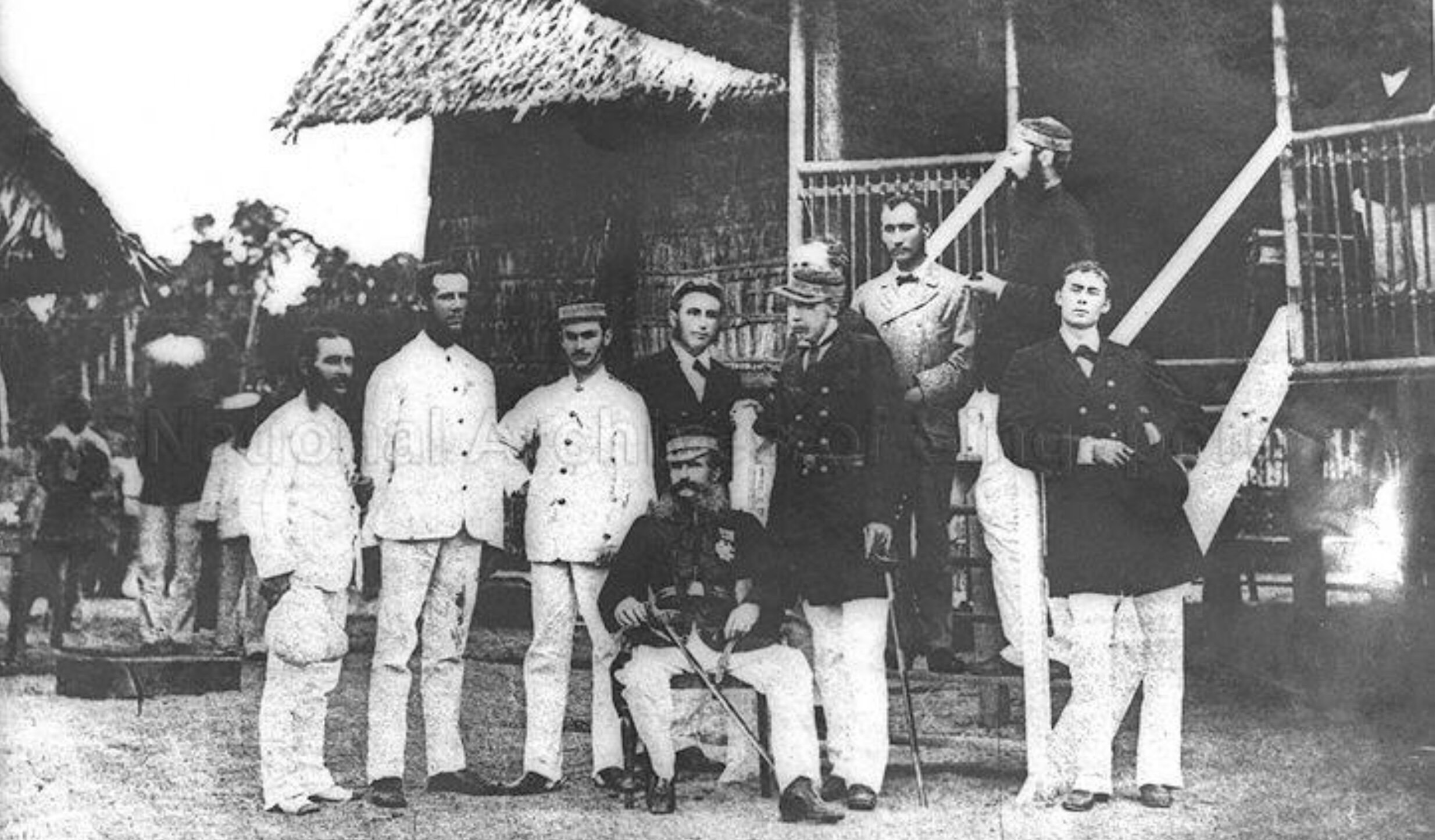
Through the Pangkor Engagement that Clarke signed with the Perak chieftains in January 1874, the British government’s ‘forward policy’ in Malaya was launched and indirect rule over the Malay states was established through the appointment of Residents. The collection and control of revenues and the general administration of the states were to be subject to the advice of the Residents, but their exact role remained nebulously defined as protectors of British subjects and foreigners engaged in trade, and as a progressive influence on government (Sadka, 1968, pp. 47–48, 49).

Having progressively obtained political control over the Malay states, the British administration began to systematically put in place key institutions that would facilitate the commercial exploitation of their natural resources. These included the establishment of rules for the leasing of land and associated property rights, the introduction of a legal and judicial system, and the building of physical infrastructure to support economic development.

British officials who attended the signing of the Pangkor Treaty in 1874: Sir Andrew Clarke, James Birch, Captain Speedy, Sir Frank Swettenham and others
Source:
National Archives of Malaysia, Identifier Number: 2001/0022334W.

In 1896, Perak, Selangor, Negri Sembilan, and Pahang were brought together to form the Federated Malay States under the Resident-General of the Federated Malay States. The other five Malay states—Kedah, Perlis, Terengganu, Kelantan, and Johor—remained Unfederated. The British Residents of the Federated Malay States and the Resident-General were answerable to the Governor of the Straits Settlements in Singapore (Turnbull, 2009, pp. 104, 109; Sultan Nazrin Shah, 2019, p. 21). This arrangement supported trade and investment, most of which came through Singapore. Starting from 1899, Singapore’s Board of Commissioners of Currency began to issue government banknotes in the form of the Straits dollar, which quickly became legal tender throughout colonial Malaya. The Straits dollar was subsequently pegged to the pound sterling at the rate of 2s. 4d. (2 shillings and 4 pence).

The Rise of Tin Mining

Although limited quantities of tin had been mined in the Malay Peninsula for centuries, it was only after the British advance that the commodity was subject to large-scale commercial production. The growth of the industry was stimulated both by an increase in demand stemming mainly from the British tin plate industry and the discovery of substantial deposits in the Malay states. Since the mining methods employed in the latter half of the 19th century were labour-intensive, capital requirements were limited to the advancing of funds to prospect for tin and the hiring of Chinese immigrants as workers, as well as equipping them with digging tools and implements (Choy and Sugimoto, 2026, pp. 137–142). As mentioned above, this investment came mainly from the Chinese merchants in the Straits Settlements in the form of credit extended to mine owners and advancers, who bore the immediate risks of the undertaking.2  Under the ‘truck system’ operated by the tin mines, miners had to purchase non-food provisions and opium from the mine advancer at marked-up prices, which were in turn supplied by traders in Singapore; by the early 1890s, the city was providing for the needs of 87,000 miners in Malaya.

As a staple port, Singapore gave the producers of tin ore access to markets in the West and thereby facilitated the emerging pattern of specialisation in primary commodity production in Southeast Asia. Through the 1850s and 1860s, the amount of slag metal sent to the port for export was unchanged at about 500 tons, since most of the mined tin in Malaya was smelted in loco and shipped to the West from Penang or Melaka (Choy and Sugimoto, 2026, pp. 141–142).

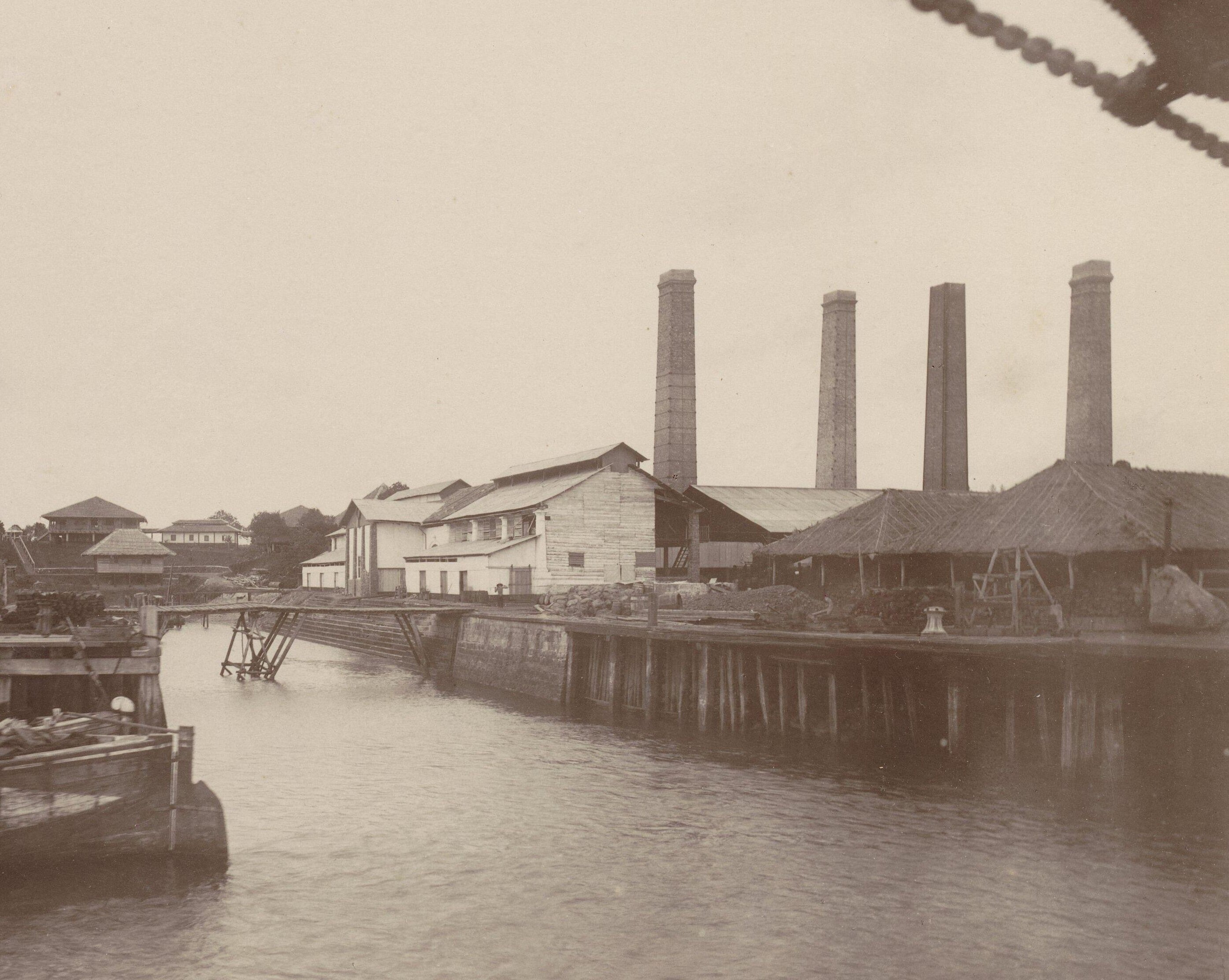
However, following the establishment of the Straits Trading Company (STC) by James Sword and Herman Muhlinghaus (who both worked for agency houses) and the opening of its technologically advanced reverberatory furnace at Pulau Brani in Singapore in 1890, exports shot up and rose to 25,100 tons of tin, or nearly two-thirds of Malayan output, by 1899. The STC borrowed from British banks for its circulating capital and sold the refined tin ingots to the European agency houses to be shipped overseas. Subsequently, the STC also set up branches and buying stations in the peninsula to make cash advances to and directly purchase the ore from mine owners, thereby supplanting the financing function of the Straits capitalists.

Concurrently with the rapid expansion of Malaya’s tin industry, the colonial government, with the aid of loans from the Straits Settlements, began to construct railways to link the mining towns of Taiping, Kuala Lumpur, and Seremban to ports on the west coast of the peninsula (Sultan Nazrin Shah, 2017, pp. 36–37; Lim, 1967, pp. 272–273, 276–277). The tin ore from the mining areas was then transported to Singapore and food and supplies were delivered in return. Later, in the early 1900s, the railway branch lines were connected by a main line that ran all the way from Butterworth—opposite Penang island—to Johor Bahru, from where the tin was ferried to Singapore via boats. Following this, the construction of a road network began to link all the main west coast towns, which was eventually extended to Singapore through the Causeway. Like the railways, road construction was partially financed by loans from the Straits government (Kaur, 1985, pp. 18–19).3

Tin smelters on the island of Pulau Brani
Source:
Licensed photo from Pictorial Press Ltd.

The Advent of Rubber

Just as Malaya’s alluvial tin deposits were diminishing by the 1900s, it was through the agency of Singapore again that the peninsula gained a second staple product. This time, it was the seeds of the rubber plant Hevea brasiliensis that ushered in a new prosperity for both territories. They were first taken from the wild forests of Brazil and brought to the Royal Botanic Gardens in Kew, London. From there, the seeds found their way to the Botanic Gardens in Singapore in 1876. At this point, the figure of Henry ‘Mad’ Ridley, who was appointed Director of the Gardens in 1888, played an instrumental role in popularising the crop. Not only was he a fine botanist who invented the herringbone method of tapping rubber, which maximised latex yield while minimising damage to the tree, but he was also a firm believer in the potential uses of rubber. The story goes that he always kept a handful of rubber seeds in his waistcoat pocket and distributed them to the planters he met.

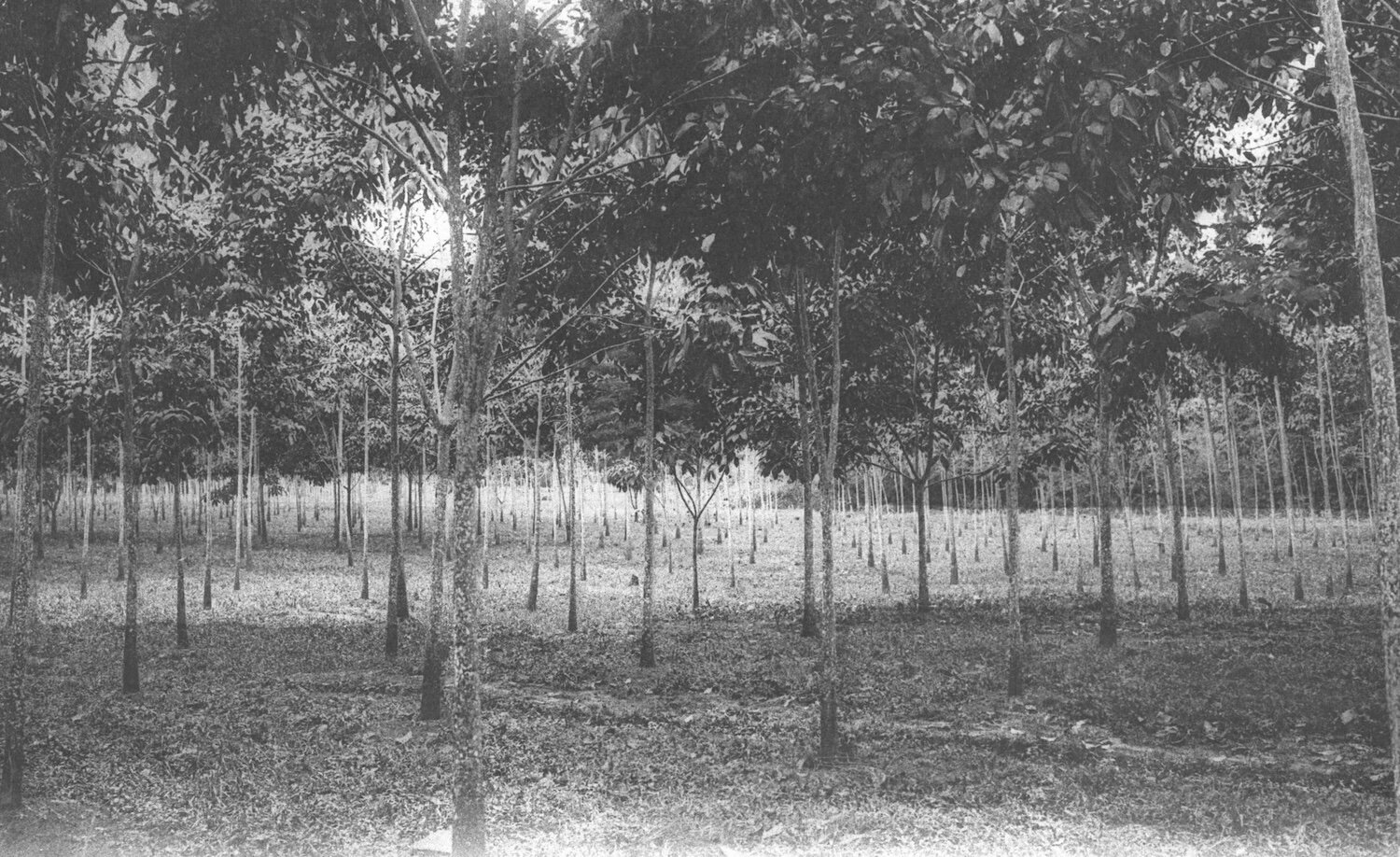
Para rubber plantation, Singapore
Source:
Courtesy of National Archives of Singapore.

Some of the first rubber trees were planted in Singapore in the early 1900s but it was in the states of Malaya that the new crop of the century found its natural habitat. From just one tree planted in Kuala Kangsar in Perak in 1877, rubber cultivation began to spread throughout the length of the Malay Peninsula when its price rose to 5s. 10½d. in 1906, thus sparking off the rubber boom. This expansion was fuelled by a dramatic increase in the global demand for natural rubber to manufacture pneumatic tyres for the budding motor vehicle industry. From a mere 15,000 acres in 1902, rubber cultivation increased to 334,000 acres in 1909 and further to 1.1 million acres by the time the world war broke out in 1914 (Drabble, 1972, p. 261). Ridley’s importunity had finally paid off.

The seven years maturity period of the rubber tree and the initial outlay needed to start a rubber estate meant that a longer-term source of external financing had to be sought in the metropolis. The agency houses in Singapore helped to float joint-stock rubber companies on the London Stock Exchange to attract investments by the British and European public, with the funds raised being channelled into setting up plantations in Malaya (Sultan Nazrin Shah, 2017, pp. 32–33). 4
 
By 1913, 373 estates had been established in the peninsula and they paid high dividends throughout the decade. But that was not all, for the agency houses also took on the responsibility for managing the estates, which involved a multitude of functions: the importation of capital goods, the recruitment of labourers from India, the transportation of rubber to Straits ports, and the provision of insurance and shipping services to foreign destinations (Choy and Sugimoto, 2026, pp. 170–172, 176–178). In return, they were paid managerial and secretarial fees and commissions on supplies provided.

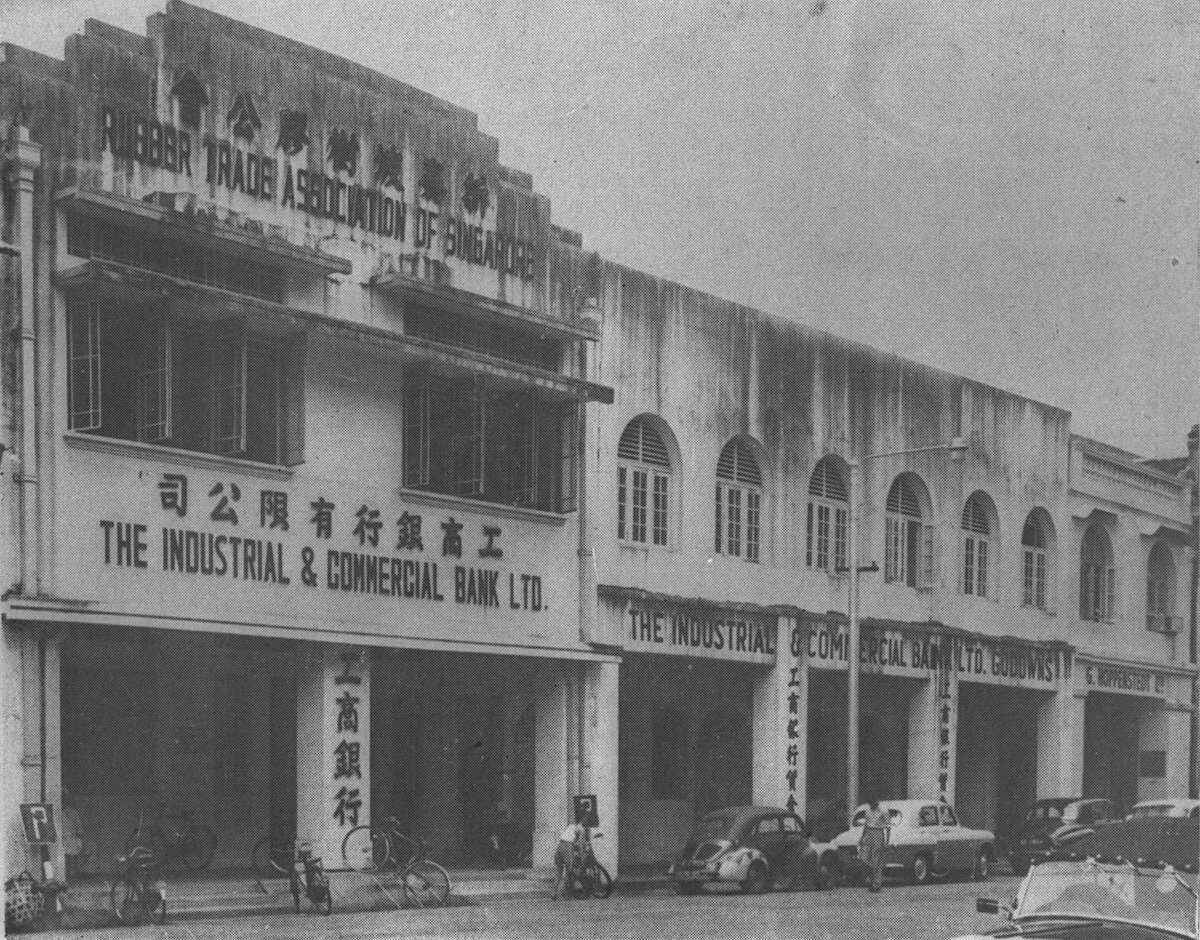
As in the case of tin, Singapore played a major role in the processing and international trading of the rubber produced in Malaya. Trading in rubber began humbly in 1911 with the holding of auctions by the newly formed Rubber Trade Association of Singapore. The auctions were given a huge boost when, through sheer good fortune, trading in London halted with the outbreak of World War I in 1914. By the time the war ended, Singapore was firmly established as a global rubber trading hub and bulk shipping centre—one quarter of world exports were sold there and four-fifths of the rubber produced in Malaya was re-exported through the city (Huff, 1993, p. 287).

The high proportion of raw rubber forwarded from the Malay states to the city was due to the presence of numerous rubber mills. In 1925, 20 mills owned by Chinese had been set up, and they also processed the increasing quantities of wet rubber produced by smallholders in the Dutch East Indies. Apart from the establishment of rubber mills, Singapore also modernised its port infrastructure to cope with the rising quantities of rubber to be exported and transhipped by building new docks and extending the line of wharfage. These improvements culminated in the completion of the Causeway linking the city to the peninsula in 1923. In that year, 75,000 tons of rubber from Malaya and 57,000 tons from the Dutch East Indies were imported into Singapore for processing (Huff, 1993, p. 289).
Rubber Trade Association of Singapore
Source: Courtesy of  National Archives of Singapore.

Conclusion

The economic history of Malaya during the colonial period reveals that its relations with Singapore transcended mere geographical proximity to form an inseparable symbiotic relationship. The spectacular development of Malaya’s two major industries—tin and natural rubber—was realised because the two territories functioned as indispensable and interdependent counterparts. The Malay Peninsula with its vast land and abundant natural resources provided the production base, while Singapore functioned as the gateway for accessing the global market. Specifically, Singapore facilitated overseas financing through the agency houses, enabled the processing of primary commodities via an advanced smelting plant and rubber mills, and supplied the modern port infrastructure and maritime services necessary to export the staple products to the West.

Crucially, Malaya’s rapid growth and integration into the global economy were substantially supported by Singapore. The latter’s early reliance on the east coast states was replaced by a heavy dependence on west coast towns during the staple era. Conversely, without the resource-rich hinterland of the Malay Peninsula, Singapore would not have evolved into a global commercial hub, nor achieved such exceptional prosperity. Their relations can thus be characterised as a true ‘partnership’ that generated synergistic effects by mutually complementing their respective strengths.

This robust model of interdependence offers implications for analysing the contemporary global economy and bilateral relations. Even today, despite having become separate sovereign nations following their separation in 1965, Singapore and Malaysia remain linked by trade and highly integrated supply chains. The cross-border division of labour once forged through tin and rubber has been transformed today into complementary relationships in semiconductors, high-tech manufacturing, and increasingly, the digital economy and green energy sectors. The historical experience of Malaya and Singapore serves as the foundation for their continued economic partnership in modern times.


References:

Andaya, B. W. 2026. ‘The “Knowledge Economy” and Tin Mining in 19th-century Malaya’, in Sultan Nazrin Shah (ed.), Chronicling Themes in the Economic and Social History of Malaysia, pp. 51–61. Singapore: World Scientific.

Braddell, T. 1856. ‘Notes on Naning, with a Brief Notice of the Naning War’, The Journal of the Indian Archipelago and Eastern Asia, New Series, 1, edited by J. R. Logan, pp. 194–232.

Cameron, J. 1865. Our Tropical Possessions in Malayan India: Being a Descriptive Account of Singapore, Penang, Province Wellesley, and Malacca; their Peoples, Products, Commerce, and Government. London: Smith, Elder and Co.

Cavenagh, O. 1884. Reminiscences of an Indian Official. London: W. H. Allen & Co.

Choy, K. M. and Sugimoto, I. 2026. The Economic History of Singapore. Singapore: NUS Press.

Drabble, J. H. 1972. ‘Investment in the Rubber Industry in Malaya c. 1900–1922’, Journal of Southeast Asian Studies, 3(2), pp. 247–261.

Drake, P. J. 2018. Merchants, Bankers, Governors: British Enterprise in Singapore and Malaya, 1786–1920. Singapore: World Scientific.

Holloway, C. P. 1842. Tabular Statements of the Commerce of Singapore During the Years 1823–24 to 1839–40 Inclusive. Singapore: Singapore Free Press.

Huff, W. G. 1993. ‘The Development of the Rubber Market in Pre-World War II Singapore’, Journal of Southeast Asian Studies, 24(2), pp. 285–306.

Kaur, A. 1985. Bridge and Barrier: Transport and Communications in Colonial Malaya, 1870–1957. Singapore: Oxford University Press.

Khoo, K. K. 1966. ‘The Origin of British Administration in Malaya’, Journal of the Malaysian Branch of the Royal Asiatic Society, 39(1), pp. 52–91.

________ 1991. ‘Taiping (Larut): The Early History of a Mining Settlement’, Journal of the Malaysian Branch of the Royal Asiatic Society, 64(1), pp. 1–32.

Knowles, M. I. 1935. The Expansion of British Influence in the Malay Peninsula, 1867–1885: A Study in Nineteenth-Century Imperialism. PhD thesis, University of Wisconsin.

Lim, C. Y. 1967. Economic Development of Modern Malaya. Kuala Lumpur: Oxford University Press.

Mills, L. A., Turnbull, C. M. and Bassett, D. K. 1961. ‘British Malaya, 1824–67’, Journal of the Malayan Branch of the Royal Asiatic Society, 33(3), pp. 1–424.

Newbold, T. J. 1839. Political and Statistical Account of the British Settlements in the Straits of Malacca: viz. Pinang, Malacca and Singapore; with a History of the Malayan States on the Peninsula of Malacca. Vols. I–II. London: John Murray.

Read, W. H. 1901. Play and Politics, Recollections of Malaya. London: Wells Gardner, Darton & Co.

Sadka, E. 1968. The Protected Malay States 1874–1895. Kuala Lumpur: University of Malaya Press.

Sultan Nazrin Shah. 2017. Charting the Economy: Early 20th Century Malaya and Contemporary Malaysian Contrasts. Kuala Lumpur: Oxford University Press.

________ 2019. Striving for Inclusive Development: From Pangkor to a Modern Malaysian State. Kuala Lumpur: Oxford University Press.

________ 2024. Globalization: Perak’s Rise, Relative Decline, and Regeneration. Oxford: Oxford University Press.

Tarling, N. 1957. ‘British Policy in the Malay Peninsula and Archipelago 1824–1871’, Journal of the Malayan Branch of the Royal Asiatic Society, 30(3), no. 179, pp. 1–228.

The National Archives of Singapore [NAS]. 1819. Record of the 1819 Treaty of Friendship and Alliance, signed on 6 February 1819 by Sir Stamford Raffles and Singapore’s Malay rulers, Sultan Hussein of Johor and Temenggong Abdul Rahman. Singapore: NAS.

Turnbull, C. M. 1972. The Straits Settlements, 1826–67: Indian Presidency to Crown Colony. London: The Athlone Press.

________ 2009. A History of Modern Singapore: 1819–2005. Singapore: NUS Press.

Winstedt, R. O. 1935. ‘A History of Malaya’, Journal of the Malayan Branch of the Royal Asiatic Society, 13(1), pp. iii–270.

Wong, L. K. 1960. The Trade of Singapore, 1819–1869. Kuala Lumpur: The Malaysian Branch of the Royal Asiatic Society.

________ 1965. The Malayan Tin Industry to 1914: With Special Reference to the States of Perak, Selangor, Negri Sembilan, and Pahang. Tucson, AZ: Published for the Association for Asian Studies by the University of Arizona Press.



Endnotes
Read was closely connected with interests promoting telegraph lines through the Peninsula and the opening of tin mines in Selangor. Through his brother-in-law in England, Seymour Clarke, his interests were presented to the British authorities.
2 European ventures to mine tin in Malaya almost all failed due to high overhead costs and inappropriate technology (Wong, 1965, pp. 132, 138, 151).
In addition, Negri Sembilan and Pahang borrowed heavily from the Straits Settlements government for administration, communications, and public works in the late 1880s and early 1890s (Sadka, 1968, p. 366).
The better-known agency houses in Singapore were Guthrie and Company, Edward Boustead and Company, Harrisons and Crosfield, and Adamson, Gilfillan and Company.
SHARE THIS PAGE
RELATED SITES

ECONOMIC HISTORY OF MALAYSIA
c/o Asia-Europe Institute
University of Malaya,
50603 Kuala Lumpur
Ooops!
Generic Popup2